Martial Arts Video - Star Wars Tai Chi - Character Animation
42 Movement Sword Form - Featuring Darth Vader
42太极剑 - 星球大战
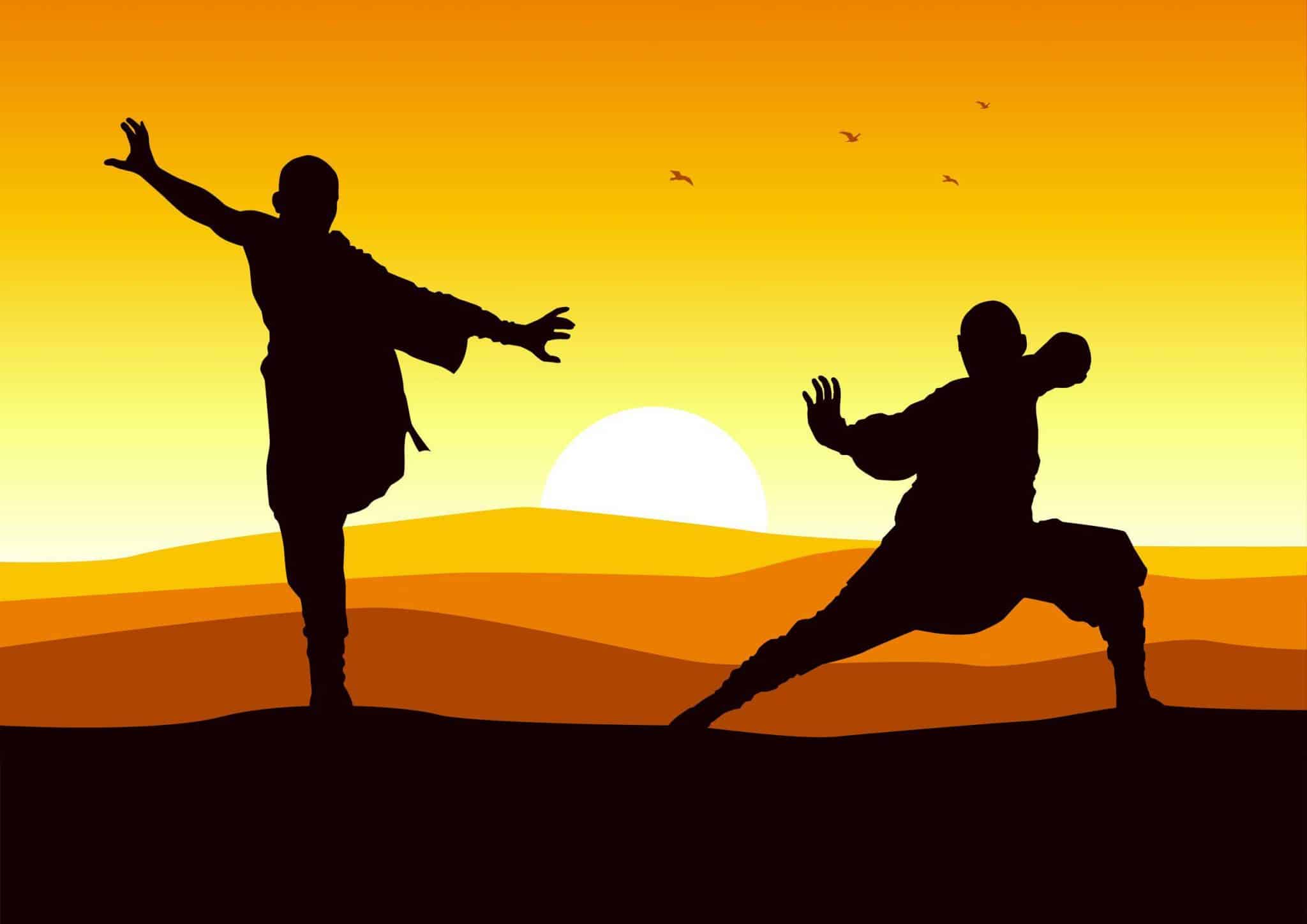
Chi is the Chinese word meaning 'life force' - an energy created by all living beings. A Tai Chi master's strength flows from this FORCE.
Known for its health benefits, Tai Chi is in fact a martial art, evolved for combat over 4,000 years. The secret is inner calm, relaxed concentration and lethal precision.
Original article and pictures take s.ytimg.com site
Chacun d’entre nous peut bénéficier de l’apprentissage du Tai Chi. Cet art chinois ancien a été qualifié de «méditation en mouvement» et est connu pour prévenir et traiter de nombreux problèmes de santé, comme en attestent plusieurs études.
C’est une pratique qui se concentre sur les mouvements provenant du torse. Pourquoi est-ce important, et comment pouvons-nous perdre cette capacité lorsque nous vieillissons?
Voici un aperçu, présenté par Synerchi Publishing :
Un jeune maître Tai Chi a écrit que le but ultime de l’apprentissage du Tai Chi était de vivre à jamais dans la saison du printemps de votre vie. Le Tai Chi n’est pas simplement pour la longévité, c’est aussi pour la robustesse, même à un âge avancé. Les avantages pour la santé du Tai Chi Classique peuvent être vus sous différents angles et à différents niveaux, tous fortement liés à la pratique de la discipline interne.
Lorsqu’on étudie les mouvements des très jeunes enfants, nous voyons que leurs mouvements de bras et de jambes proviennent souvent de leur torse, leurs mouvements sont détendus et sans tension. Quand nous vieillissons nos mouvements ont tendance à se concentrer sur nos bras, nos jambes et nos épaules et moins sur notre torse: il commence également à y avoir une tension et une raideur dans nos mouvements. Peu à peu, nous perdons le contact avec le torse. Nous ne pouvons que faire que des mouvements simples, mais pas de mouvements subtils, complexes et puissants que le torse est intrinsèquement capable de faire. Nous parlons de la dextérité des mains ou des pieds, ne sachant pas que le torse peut être capable d’avoir autant de dextérité, mais nous pensons au torse comme une partie inutile du corps.
Nous voyons souvent la marche des personnes âgées avec un changement de la marche-mouvement qui ne se prolonge plus dans le torse. Avec tous les principaux organes et le système circulatoire complexe situés au niveau du torse, on comprend facilement l’effet défavorable de l’inaction et de la stagnation du torse sur la santé du corps. On peut affirmer que l’apparition de la rigidité cadavérique interne précède réellement la mort!
Si vous souhaitez conserver la jeunesse des systèmes internes du corps, vous devez apprendre à déclencher les mouvements du noyau interne du corps, à cultiver l’énergie interne de votre corps. Une fois que nous sommes en mesure de retrouver notre connexion avec le torse, notre corps commence à fonctionner plus efficacement, ce qui entraîne une meilleure santé.
Apprendre à canaliser son énergie, retrouver une harmonie avec soi-même et avec le monde, voilà ce que propose cette discipline ancestrale. Les bienfaits du Tai Chi Chuan sont doubles. Recommandé pour ses vertus relaxantes, cette pratique agit également en profondeur sur l’organisme. Yves Blanc, professeur à l’école de style Yang originel nous éclaire sur ce qui est à la fois « un art martial, une gymnastique et une méditation ».
Comme une gym douce, il agit sur la souplesse des articulations et le tonus musculaire. Il permet de mieux coordonner les mouvements dans l’espace. Selon Yves Blanc, il s’agit de « retrouver un équilibre en accord avec les rythmes de la nature ».
A la fin d’une séance, on éprouve une sensation de chaleur et de bien-être. A long terme, on se sent plus alerte, mieux en forme. Pour trouver le mouvement juste, une position tenue sans effort, on doit travailler en total relâchement. Le travail respiratoire enseigne à bien placer son diaphragme et à conduire son souffle. Les mouvements réalisés en étirements apportent souplesse, tonicité, renforcent les tendons et les muscles.
Bien qu’aucune étude scientifique ne puisse réellement appuyer ces propos, une pratique régulière du Taï chi apporte de nombreux bienfaits, tant sur le plan physique que sur le plan psychique.
Bienfaits physiques :
– Travail sur la posture et l’équilibre.
– Contrôle de la respiration et harmonisation avec les mouvements du corps.
– Amélioration de la souplesse grâce aux étirements.
– Décontraction des tensions lombaires.
– Entretien des amplitudes articulaires.
Bienfaits Psychologiques :
– Meilleure gestion des situations de stress.
– Relaxation et détente.
– Amélioration de la concentration et de la mémoire (mémorisation de l’enchaînement des mouvements).
La pratique du Tai Chi Chuan
Aucune aptitude particulière n’est requise. Adolescents ou personnes âgées, tous peuvent se laisser tenter par cet art martial qui n’utilise pas la force brute comme valeur première. Enchaînements de mouvements souples et de postures précises incarnés dans une espèce de combat dansé au ralenti, le Tai Chi Chuan se concentre autour « d’une mise en mouvements doux et d’étirements légers et constants », rappelle Yves Blanc, professeur à l’école de style Yang originel. Mais attention aux apparences : « Les gens arrivent avec l’idée qu’on se fait du bien facilement. Il faut travailler. Le plus important dans l’apprentissage du Tai Chi Chuan c’est l’observation et l’humilité.
In this tai chi video Bruce Frantzis talks about his experience learning tai chi with T.T. Liang. Who was an amazing man and teacher of tai chi who loved life and tai chi.
Bruce took his 1st class with T.T Liang is 1972 in Boston, Ma.
They studied pushing hands, free fighting, sword form system and his 2 man set.
T.T had a love of life and continued to learn throughout.
To join Bruce's tai chi list goto: https://energyarts.leadpages.net/tai-... “Energy Arts is dedicated to offering the most comprehensive tai chi, qigong (chi gung), internal martial arts, breathing and meditation programs on the planet.”
Original article and pictures take s.ytimg.com site
If you want to learn tai chi, you’ve found the most comprehensive system in the West for starting and advancing your practice!
Tai chi is a miracle health exercise with applications as a powerful martial art and effective form of moving meditation. We hope you discover for yourself how this wonderful, gentle art can change your life.
Click into any of the following six articles written by Bruce to get started now. Additionally, you can sign up for Bruce’s mailing list to receive his FREE Tai Chi SecretsReportwith more in-depth information for serious students:
Practicing the Wu Style Tai Chi short form at the beach Original article and pictures take www.energyarts.com site
Learn Tai Chi Online with Jet Li's Online Academy - Lesson 9
In this video taken from Taiji Zen's Online Academy, we'll teach you how to apply the kinetic application of Lǚ. The kinetic concepts of Tai Chi Chuan are all concepts of applying force to your opponent. Lǚ means to divert energy, so this application will teach you how to divert incoming force eaily and gently.
Jet Li's Taiji Zen Online Academy teaches Tai Chi Chuan with a unique principles based approach. It is well-suited for beginners learning Tai Chi as well as more advanced students.
In Taijiquan theory, Lǚ and Jǐ (Pressing Energy, Kinetic Concept #3) are two mutually interactive forces. The down and backwards deflection of Lǚ can be used to neutralize the forward pressing energy of Jǐ.
Subscribe to our channel for more unique content in the future!
Transcripts:
INTRODUCTION
Lǚ is an energy of deflecting and neutralizing, a very powerful and a versatile concept in Martial Arts in general and in Tai Chi Chuan in particular.
Now Lǚ and Jǐ, or piercing (pressing) energy, are mutually interactive forces. So in your practice, your partner is going to feeding you Jǐ energy. Master Wang is going to be demonstrating Lǚ.
KINETIC APPLICATION
He steps out with the right leg to the outside of his partner. The stance is opened at 30 degrees relative to the partner forming a very wide 'V'. This helps create stability and move for maneuver in this position.
The left hand is on the partner's left wrist, and the right palm controls the partners elbow. The hands are gentle but firm, not grasping but still controlling.
As the partner presses forward, Master Wang uses Lu. He deflects and neutralizes the incoming force by shifting his weight back.
His arms absorb and redirect the partner's Jǐ energy, leading it into emptiness.
Notice how Master Wang is not pulling his partner's arm but rather yielding and redirecting only as he feels the incoming force.
Using Lǚ, the point of force should be in the palms. That means that the arms are relaxed, but heavy
Now take care not to use arm strength to pull your partner downwards.
Original article and pictures take s.ytimg.com site
Learn Tai Chi Online with Jet Li's Online Academy - Lesson 2
Jet Li's Taiji Zen Online Academy teaches Tai Chi Chuan with a unique principles based approach. It is well-suited for beginners learning Tai Chi as well as more advanced students.
This video, taken from Taiji Zen's Online Academy, guides you through the key principle of 'Suspend from the Crown' or 'Xū Lǐng Dǐng Jìn'
'Xū Lǐng Dǐng Jìn'(虚领顶劲)means to maintain an upward floating intention, as if your entire body is being suspended by a string from the crown of the head. This intention should be continuously maintained in every movement.
Subscribe to our channel for more unique content in the future!
Transcript:
The first principle that you are going to learn in your study of your Tai Chi Chuan Essentials is called xū líng dǐng jìn, which means 'Suspending the Body from the Crown of the Head'.
This is the first step in relaxing structurally and it connects you, it connects the whole body to the heavens above and the earth below, sort of giving you a sense of being bigger than just the confines of your physical body.
The upward intention allows you to let everything else relax and let go.
Now here is how to do it. First thing is to suspend your head from the top as if you are being drawn up by a string.
So if I tie a string to the top of her head and lift if up and we get taller and taller, now that string is going to hold you up and everything else can relax below it.
The second thing you can do is elongate the back of the neck, so the back of the neck gets longer and longer. This will cause the chin to float in just a little bit, but you don't have to pull the chin in just make the back of the neck longer.
And finally, always imagine that you are floating. As if your head is a balloon filled with helium, when the balloon goes up the rest of the body can go down.
The benefits of this kind of proper alignment is that it bring your spine into neutral. Now the neutral spine is the best position for better energy circulation, and it is also the optimal position for increased mobility, flexibility and strength which are essentials in your study of Tai Chi Chuan.
Original article and pictures take s.ytimg.com site