вторник, 14 сентября 2010 г.

Restore and Rejuvenate

Restore and Rejuvenate

January is a time of rest, reflection, and restoration of the body and mind. With a year passed and a new year ahead, we find ourselves at a spiritual and physical crossroads, encouraged to take a look back at our efforts since the last January of our lives. How far have we come? How far do we have left to go? While the journey may still be long, the sense of newness and purpose breathes itself into the month – with January comes such possibility.


Still in the midst of winter, the cold and wet world around us challenges the immune system the same way the New Year challenges the mind. Our bodies and souls are strained, yet equally reaffirmed by the communal push toward health and a new commitment to one’s goals. This month, we’ll focus on relieving that strain, comforting the soul, and empowering the self to make the great changes it feels so necessary to pursue.


Rejuvenation for the Body, Mind and Soul


While reflection is important, it’s remains crucial to live in the present moment, tending to your present needs. What’s more, rejuvenating the body, mind, and soul isn’t simply a task of thought, but also a task of action. Take time this month to care for the self, acutely focusing on the needs of the physical body and how those needs strengthen or weaken the resolutions you feel within the self.


Make Intent Driven Resolutions and Commit


When considering your New Year’s Resolutions, stray from cliché or socially pressured goals. Instead, dive deep within yourself and encourage the asking of profound questions. What are big goals you want to target this next year? What are the steps you need to take for success? Why do you feel the need to accomplish these goals? It’s here, in thought, that you will discover your true desires for growth, and with a true desire in mind, you poise yourself for not just action, but success.


REJUVENATE YOURSELF, EVERY MONTH


Each month, Yogi Surprise prepared a monthly box of yoga products designed to revitalize and rejuvenate your mindful life of movement. It’s a beautiful way to compliment your healthy lifestyle. Join today and treat yourself to monthly retreat in a box!


Original article and pictures take yogisurprise.com site

четверг, 29 июля 2010 г.

Practice yoga anywhere, anytime

Practice yoga anywhere, anytime

Unlimited access to yoga classes · Different styles · Any device · From $11/month


Choose from an interactive library of more than 80 engaging and quality video classes, created to suit different yoga styles and levels. With unlimited access to all yoga : time videos, it is easy to pursue greater challenges on the path to your true self.


No matter what your skill level is, or what yoga style you prefer, we have the right classes for you! Get three days, credit card-free, unlimited access to all yoga : time lessons and see for yourself!


VINYASA YOGA

VINYASA YOGA

Practicing yoga means believing in the intelligent design of human body. YogaTime means the intelligent design of an interactive platform created to suit the needs of any modern day yogi. Forget the restricting factors of money or time. All you need to reach your ultimate goal of yoga is a net connection and a yoga mat.


I’m a stay-at-home mom with two VERY demanding twins, so, it is hard to find time to go to a yoga studio. With YogaTime, I practice yoga on my time and terms.


I totally love yoga, but I totally hate yoga studios. YogaTime takes care of that problem - I get to have a real yoga class with a real teacher without needing to leave my house.


I travel a lot and don’t have an opportunity to go to yoga studio. YogaTime helps me to maintain my balance, focus and inner strength when I’m far from home.


Original article and pictures take yogatime.tv site

пятница, 23 июля 2010 г.

Our Founder Master Moy demonstrates Taoist Tai Chi® arts.

Our Founder Master Moy demonstrates Taoist Tai Chi® arts.

Master Moy Lin Shin, founder of the Fung Loy Kok Institute of Taoism, demonstrates the Taoist Tai Chi® arts.


In 1970, Master Moy immigrated to Canada, where he devoted the rest of his life to fulfilling the the aim to help people restore and maintain their physical, mental and spiritual well being through the practice of the Taoist Tai Chi® arts.


Master Moy was always careful to point out that these teachings were more than just a mere set of movements, they encompassed practical wisdom for living, drawing upon the richness of Chinese culture and Taoist tradition.


Read more on http://www.taoist.org/about-us/our-fo...


Original article and pictures take s.ytimg.com site

понедельник, 28 июня 2010 г.

Movement Meditation

Movement Meditation

Now this is a wonderful meditation variation, especially for those of you who struggle to sit still. I made use of this type of meditation when I first started and it is a great way to connect your body and breath. By connecting your movement to your breath, you can get into the right mind state for meditation a lot faster and easier.

Movement meditation is as simple as practicing mindfulness in all life activities. It includes any type of meditation in which you move. There are many different options but basically any movement can be used as a meditation if you apply mindfulness and do it at a slow pace.

In our fast-paced world, many people struggle to sit still long enough to meditate, or become restless and start to fidget. Different forms of movement meditations are great alternatives, as you receive the benefits of mindfulness while getting some gentle physical exercise too. Therefore, a walking meditation is specifically helpful to release physical tension and stimulate blood flow.

Movement meditation can be practiced indoors, but outdoors is usually preferable to give you space to move, as well as fresh air. It can be practiced before sunrise, during your lunch break, after work or after dinner. Practicing this at certain times of the day will allow your movements during other times to be transformed. Movement meditation is a powerful way to change an activity we do daily into a mindful and peaceful experience.


Steps to Practice a Movement Meditation


Step 1: You can choose to be inside or outside, find a peaceful spot in your garden or a park or the beach. You can begin seated with your eyes closed while you bring your attention to your breath.

Step 2: For five minutes simply spend time syncing every movement you make with your breath. Try different gentle, slow and repetitive movements such as swaying your body from side to side.

Step 3: Put your left hand over your heart and your right hand over your stomach and breathe. Feel your chest and stomach expand as you inhale and compress as you exhale.

Step 4: Keeping your eyes closed, slowly stand up and feel how your body lengthens. Start a body scan, begin at your feet and feel your connection to the earth, move upwards slowly noticing any tension, stiffness, sensations or emotions that you may be feeling.

Step 5: Open your eyes now and start to take small, slow steps that align with your breath. As you inhale step forward with your right foot and as you exhale place your left foot in front of the right. Keep your pace consistent and slow and completely in tune with your breath.

Step 6: Continue in this manner until you reach the end of your path. Stop here, take a deep full breath in and out. Then turn around and follow the path back in the same manner as before.

Step 7: Your gaze can be anywhere during this meditation, and your thoughts will wander like it does during any meditation. Therefore, try to keep your attention on the rhythm of your breath and steps or movements, and just redirect it back if you get distracted.


Guidelines to Help You Practice Movement Meditation


  • A movement meditation does not have to be too structured and can be anything from 10 minutes to an hour.
  • Choose a place without too many distractions and a predetermined path that is not too long, this allows you to get to know the route, which minimizes the chance of distractions even more.
  • Make sure to wear comfortable shoes, or depending on where you are you can even go barefoot to connect with the energy of the earth.
  • Once you become comfortable with your movement and walking meditation, you can bring these mindful elements you have learned into your everyday life, making yourself mindful of all aspects of your life.
  • The combination of gentle movement, a meditative state, fresh air and sunshine will energize and revitalize you and bring you closer to nature.
  • If your mind wanders, notice what it is that distracts you and let it go, to bring your attention back to your breath and movement.
  • If you are a yogi you could even incorporate some gentle simple yoga positions during your movement meditation.

It is important to understand that there really is no difference between mindfulness and meditation, so by incorporating mindfulness into your daily activities you are getting the same benefits as meditation.


Related


Mindfulness Meditation

Mantra Meditation
February 26, 2017

Vipassana Meditation
September 13, 2017

Hi, I’m Daniella.


A freelance blogger with a passion for writing, an animal-assisted therapist, NLP practitioner and mindfulness coach – specializing in Numerology and Mindfulness.

I live in Johannesburg, South Africa with my husband and a house full of animals (3 dogs, 3 cats & a snake).

I believe we all have a magical potential within us that can be used to change this world for the better – and I would love to help you discover your magic…


Original article and pictures take i2.wp.com site

среда, 9 июня 2010 г.

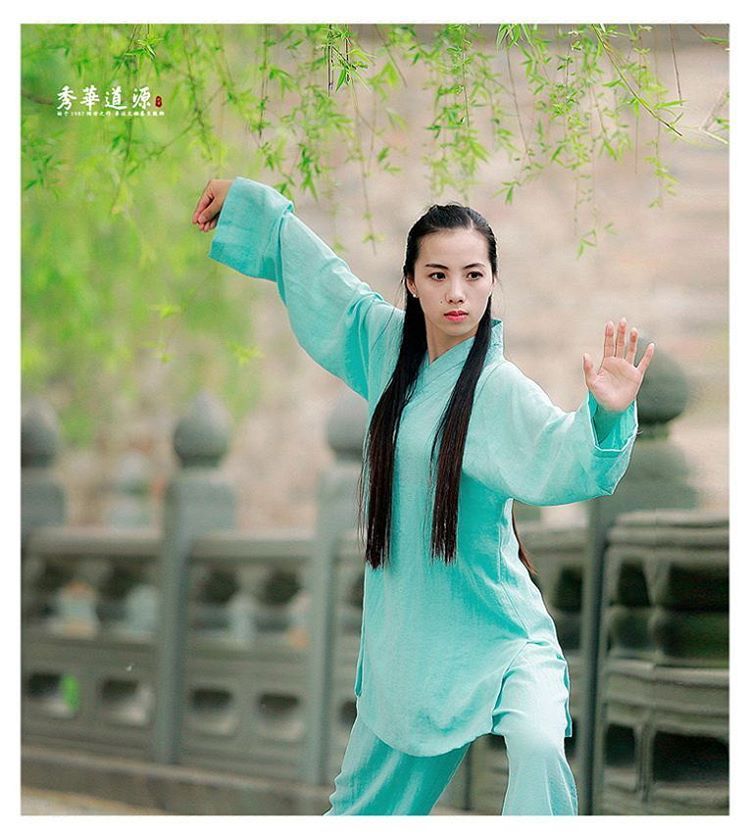
Morning Tai Chi

Morning Tai Chi
Morning Tai Chi

"Learn the form, but seek the formless. Hear the soundless. Learn it all, then forget it all. Learn The Way, then find your own way."


Original article and pictures take 78.media.tumblr.com site