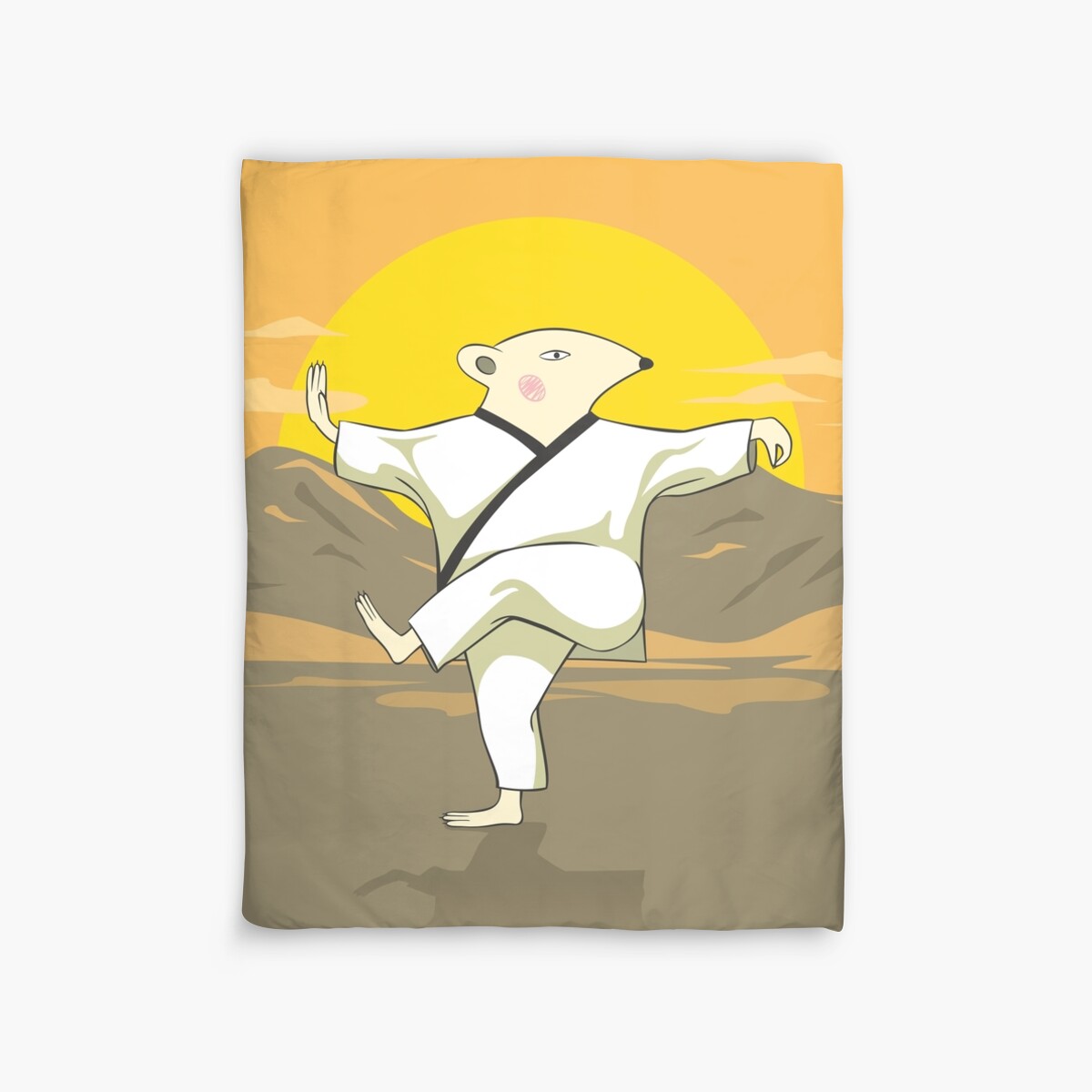
Being a leader of Tai Chi Clothing for hundreds of years, this type of pants is famous for its craftsmanship and its innovation in the materials. Tried by numerous practitioners of Tai Chi Chuan, it is widely recognized for its softness, smoothness and breathability. It is extremely environmental-friendly and washable as well as anti-bacteria.
Move your mouse over image or click to enlarge Tai Chi Clothing Tai Chi Clothing Tai Chi Clothing Tai Chi Clothing Tai Chi Clothing Tai Chi Clothing Tai Chi Clothing Tai Chi Clothing Tai Chi Clothing Tai Chi Clothing Tai Chi Clothing Original article and pictures take www.icnbuys.com site
Does Tai chi ring any bells in your mind? Many of you might faintly remember some similar words like kung fu and infer that this is a Chinese martial art form. Let us tell you that you would be right and yet not fully right! Tai chi is indeed an ancient Chinese secret- a secret to good health and a peaceful mind.
What is Tai Chi?
Tai Chi is a form of exercise belonging to the ancient Chinese tradition. It is practiced by a lot of people even today in the form of a graceful exercise to reduce stress as well as lower the effects of health ailments. This Chinese form of exercise has very gentle movements in a predestined elegant flow, which many like to call “meditation in motion”, owing to the balance and inner peace that it fosters.
Some also address Tai chi as Tai chi chuan. But whatever you may call it, its character remains the same! It is a self paced and gentle form of exercise which focuses on stretching. Every stretch slowly leads into the next posture without halting, therefore keeping you in constant motion at a defined pace. There are various styles of Tai chi, each of which is based on a different methodology and principle. There are internal variations too, wherein certain postures focus on maintaining health, certain others, on building up body strength and some focus just on the martial arts attribute of Tai chi.
History of Tai Chi Moves
The history of the present form of Tai chi can be traced back to the five traditional schools, namely: Chen, Yang, Wu (Hao), Wu, and Sun. The theories and practices followed by these schools are believed to be formulated by a Taoist monk named Zhang Sanfeng in as early as the 12th century. During the same time, the principles of neo Confucian school of thought were trying to penetrate into the Chinese intellectual traditions. The form that we see today, took shape around the mid 1800s.
How are Tai chi Moves Practiced?
Fitness clubs and health clubs offer a number of martial art based programmes, of which Tai chi is just one option. You can easily get hold of a number of videos, as well as read books about the techniques of doing Tai chi, but it is always better to start the exercise under the instruction of a trained person. This also ensures that you get maximum benefits from it and learn it systematically. There are numerous Tai chi classes where you can choose to learn specific methods as per your area of focus. A basic course in Tai chi lasts about 12 weeks.
A basic Tai chi class includes proper breathing techniques, certain positions to improve your posture and gives you instructions to practice this art without causing injuries to yourself, in any manner. It has sessions mostly in groups to help you motivate yourself to get the basics properly. There are several types of Tai chi which focus on particular aspects like balance and fall prevention, and endurance building etc.
The workout schedule tentatively includes some basic warm ups and stretching, followed by simple yang style movements. The basic patterns of practicing this style are also taught which helps you to do it yourself after a few more sessions. After you get yourself acquainted with the basics, multiple angles of the same and in-depth methodology are introduced in Tai chi for beginners.
Benefits of Tai chi Moves
Any form of exercise is good for the body. Tai chi is not as popular and not practiced as frequently as aerobics, but the benefits of Tai chi moves just cannot be ignored. Once you get to know how it helps you, you would surely consider this on par with your favorite fitness regime. Let’s have a look at the benefits of Tai chi moves:
Improving Balance:
There has been a lot of research done on individuals and Tai chi moves. All these studies suggest that due to slow and systematic movements, Tai chi increases co ordination of the upper body with the lower body. There are many shifting movements, with one leg in the air, which helps improve balance and reduces fall frequency noticeably.
Stress Relief:
Stress has risen dramatically in our lives, leading to health problems such as high blood pressure, heart problems etc. The demand for a healthy life through exercising is high. Tai chi is one of the physical activities which can help reduce stress noticeably. As this technique focuses on breathing techniques, concentrated physical movement and mental co ordination, your body gets activated and rejuvenated, helping to improve your quality of life. In turn, it relieves you from stress.
Enhancing psychological health: When your mind is at peace, the functioning of your body is smooth and that helps to preserve mental health too. It keeps you away from too much tension, conditions like sleeplessness or paranoia and reduces the possibilities of psychological disorders like schizophrenia.
Diabetes:
Diabetic patients are advised to constantly do some kind of physical activity. Tai chi is one of the less rigorous ways for people having diabetes to stay active. It helps to keep the blood circulation normal as well as, helps all the parts to functions smoothly. The insulin production stays regulated and hence, there are less chances of increased blood sugar.
Cancer:
Cancer patients are advised by doctors to keep their mind at peace as they go through the radiation treatment. It is believed that Tai chi moves bring all the elements in the body under control. It helps in harmonizing their functioning, thereby helping cancer patients improve. In many cases, the affected cancer cells also get eliminated due to practicing Tai chi moves.
Parkinsons:
Parkinsons affects the movements of the body. It is believed that Tai chi helps to maintain balance which usually patients suffering from Parkinsons, lack. It also reduces the span of progression of this disorder.
Arthritis:
As Tai chi involves gentle swing movements of the body, all your muscles as well as joints are worked out well. Tai chi also provides necessary lubrication making you “joint”fit.
Tai Chi for Seniors:
To find out the effect of Tai chi on seniors, a test was conducted which included people from the age group of 22 to 76. The effects of Tai chi on cardiovascular function, flexibility as well as balance were recorded. These seniors were provided with eight weeks of proper training in Tai chi.
It was observed that they showed significant developments in balancing as well as flexibility. This training helped many in getting rid of previous joint pain issues. Tai chi also helps to reduce the possibility of strokes or seizures in senior people.
Who Shouldn’t Practice Tai chi?
Pregnant women: Even though tai chi has gentle movements, there are certain movements which might not be apt during pregnancy, especially after the third month. It is advisable for expecting women to take doctor’s advice before doing Tai chi moves.
People with Osteoporosis:
In osteoporosis, there are certain restrictions on your mobility. If these moves are done in severe osteoporosis cases, it might cause permanent damage.
Back Problems:
Tai chi moves involve light kick-like movements at times, where there can be jerks in the lower back. These moves do not suit those with back or spine problems as jerks can cause damage.
Joint Problems:
Joint pain can limit movements. And Tai chi can increase severity of joint problems. It is advisable to try some other form for strengthening and then switch to Tai chi.
Tai chi is surely an interesting way to keep yourself fit, physically and mentally. If you think that aerobics, gyming and dieting are not for you, try Tai chi. It is sure to keep you mesmerized and involved for as long as you live!
Original article and pictures take urbanwired.com site
When Tai Chi Push Hands, Tai Chi Steps and Tai Chi Posture come together producing Practical Tai Chi Fighting Technique
Introduction
First of all, I only present my opinion, this text is not a "final truth". There are Tai Chi schools, that practice different approaches, and nevertheless, achieve astonishing results. So, please, keep in mind, that it is only one of the possible viewpoints.
When teaching Tai Chi, we learn three aspects of it. The first one has to do with forms. A student need to learn the sequence of techniques, as well as some rules that should not be violated. Generally speaking, by performing forms (correctly!!!), one can achieve the energy flow, enter the meditation state and improve his / her health.
The second aspects deals with the fine mechanics of Tai Chi. Not just "follow these rules", but also being able to explain WHY the particular rule is important. In this text, I will focus on this aspect a lot.
And finally, the third aspect, the "chi". Using the energy flow to turn it into a Practical Tai Chi MARTIAL style.
However, here is the problem.
You see, I believe, that one can learn the form by the book, though, of course, a live teacher is always better. One can get some understanding of how and why the Tai Chi "rules" work - from the book. But I do not believe it is possible to learn the martial aspect of "chi" from the book, or, at least, it will require a much better teacher than I am.
Once again. To make your "chi" flow, you can use a book. It is rather simple. To make it flow in such a way, that your opponent looses his balance, takes a teacher, that is present in the same room, looking at you, correcting your mistakes.
I know of few Tai Chi schools that use this approach successfully, but there is no way to EXPLAIN the process with words, it is all about feeling.
Fortunately, there is another way.
The "fine mechanics" of Tai Chi, mentioned above, can be explained with words (though you need a partner, and preferably, a teacher, to master it). The result will be the same, as in "chi" approach. Actually, these two roads will take you to the same place, if you study the "fine mechanics", at some point you will perceive it as "chi".
So what I am going to do here, is discussing the mechanics of Tai Chi "inner" style, keeping in mind, that this is only one of possible approaches. I know, that some people will object against talking about "chi" as about balance and mechanics, but let me repeat, by following this approach, you will, at some point, notice that you have "switched" from mechanical to energy approach - and from that point, they are the same.
Also, this approach allows you to distinguish between good and poor Tai Chi schools, but this is definitely beyond the scope of this text.
Rules
These rules are universal. They apply to Tai Chi Push Hands exercises, to performing Tai Chi Steps and to achieving the proper Tai Chi Posture.
In Tai Chi tutorials, available on this site, "rules" are provided as list of "do" and "don't". Like "keep your lower back straight", and so on. Here I am going to examine some of these rules from mechanical point of view. Keep in mind, that I am only going to discuss martial applications here, not healing, meditative etc.
Always push back with your "min men" point
I use this rule a lot to explain what a correct Tai Chi Posture should be. Also, students violate it a lot, too. The idea of the rule is to make your lower back flat, rather than curved forward. As they say in ancient Chinese scolls, "Your back should be like back of a turtle".
Let's take a look at the way the person takes the punch in a chest.
As you can see, if there is a curve forward in the lower back area of the spinal cord, the punch (or a steady pressure, for that matter) will break the person's balance. While if this area is flat (curved back), the pressure "goes down, through the feet, into the ground".
This approach is part of the pressure absorbing technique, used in inner martial arts (you see it a lot when people practice Tai Chi Push Hands), when you push an opponent, and instead of falling, or at least, steppong back, he suddenly returns you this pressure, coming from the other hand and in the other direction.
Now let's take a look at the person, trying to push (Tai Chi Push Hands). He is using his hand, and the counterpressure goes through the shoulder. On the left, the person has his lower back flat, on the right, he makes an error of having it curved forward.
As you know from the elementary physics, the pressure cannot appear from nowhere. In our case, to push with the hand, we need to push against the ground, in the opposite direction. As you can see from the picture, if the lower back is curved forward, our own pressure is breaking our balance, while if the back is flat, the balance remains.
This rule comes together with its counterpart: always keep your coccyx turned forward. In most cases, it is the same rule. Let's take a look at the forces, affecting our balance, this time paying attention to the coccyx area. We will assume, that the force goes through the bones, which is pretty much true.
As you can see, if the coccyx is not aligned properly, the pair of forces (fron the pushing hand and from the ground) work together to turn it additionally, so instead of breaking the opponent's balance, we work on breaking our own.
By the way, part of the "sensitivity" of a Tai Chi practitioner, that I am going to discuss later, is directed at sensing such vulnerabilities in opponent's balance, and exploring them.
Always keep your neck straight, as if there is a force, pulling your head up, applied to the top of your head
Now, not following this one in a martial situation is a very bad habit. You may talk to boxers, to get an additional confirmation. If your neck is straight, then when you get a punch in the chin (the same way as with the lower back, discussed above), the energy goes down, by the spinal cord, dissipating there. If the neck is corved forward, it may produce a trauma, or even kill you. The "energy" mentioned here may come from the punch, or from one of the few martial techniques, when the opponent shakes your body in a special way 9so called "dropping the chi").
Tai Chi Posture: Limits
In this short chapter, we will only talk about few limits, as you get the idea, you will be able to apply it to other "limits" as well.
"Keep your armpits open". It means, the hand should not go: a) inside, this way if someone pushes you, you will not be able to resist. b) to the outside, this way, if someone pushes your hand back, you will have to push against a huge leverage. c) up, this way your shoulder will go up, and you will not be able to push forward. Also (see below), the energy you produce from your feet, will not reach your hands. d) down, this way (same in c) your opponent will simply punch you, as your hand is not protecting you from the frontal attack.
You shouldn't sit too deep, as at some point you will have to bend forward and to bring your coccyx back, both things compromizing your balance.
You should keep your elbows down whenever possible, as you will get kick in the ribs otherwise. Also, the higher the elbow, the longer is the leverage, in case pressure is applied to your hand in a backwards direction.
And so on - as always, for these strict rules, there are strict and logical mechanical reasons.
Practical Tai Chi: Energy, force, balance
Chinese are very practical people. So when you hear something like "Tai Chi works with natural forces", do not thing earthquakes or hurricanes. Think gravity, inertia, balance.
When it comes to the term "force", we will use one from the elementary physics. We push, an object pushes back. If forces are not aligned properly, either the object, or us, someone will loose the balance. Very simple. Now, what about the energy? (Once again - I am not talking about the "mystical energy" here, as I have no idea how to do it in a written text).
Let's take a look at a typical Tai Chi Fighting situation - you are in a "jun juan" or similar position, pushing your opponent away.
There are two "types" of hands present here: curved out (Yan) and curved in (In). Let's take a look at the "Yan" hand first.
The physical effort ("force") is directed by the red circle, when done properly, it feels like holding a large bag, or a tree (that is where the jan juan, the "big tree" term came from). This is NOT the push directed at the opponent! This is simply a version of a jun juan position.
However, the energy (green arrow) is directed at the opponent. He feels it as a pressure, and if asked, will probably say something like this (you hear it a lot when non-Tai Chi people try Tai Chi for the first time): "I thought it is a soft "inner" martial art. Instead, you are pushing with all the force you got."
They are wrong. There is no force involved. If you push, and an opponent suddenly jumps back, you will loose your balance. But if your force goes in a circle and is (by this circle) returning to you, then your opponent's retreat will not break your balance at all.
We will talk about it more in "structure" chapter.
Now, let's take a look at the "In" hand.
Again, there is a circle - this time, outer circle, present. It feels (for the person doing the technique) as if your hand is going by this circle, following the fingers. Yet, from the opponent's point of view, there is a strong pressure, directed at him (green arrow).
This simple mechanical concept takes us to the really advanced matters of balancing In and Yan. When you are in contact with your opponent, you can - provided some practice - feel his balance, and you can break it, as well as change your position (Tai Chi Steps), to regain the balance of your own. We will talk about it in the "structure" chapter, too.
By the way, by "when you are in contact with your opponent", I do not mean the wrestling. When he punches you, and you block the punch, it creates a momentary contact, and for an advanced practitioner of the inner martial style, it is enough to feel what should be done, to change the posture (see for example "absorbing the punch" discussed above in the min men section), and to do extra steps to break opponent's balance. It looks like the opponent is punching you and then falls, with no reason.
It may sound a bit too complex, and in a matter of fact, it is. Learning the inner style is not as easy, as learning the "outer" one. However, it is doable. As for the time required, I know a 18 years old girl, who got to this level in 1.5 years of doing Tai Chi for few hours a day.
Tai Chi Push Hands: The structure and the energy
For this simple exercise, you will need an assistance of someone weaker than you, perhaps a child. Stay straight, with your hand extended forward. Ask the child to push at your hand, to break your balance.
If you are strong enough, the child will fail.
Now, extend your hand to the side. The same child will be able to easily push you off balance, because the leverage now is much larger, or, as they would say in Tai Chi, because your limits are violated.
This was a simple, and not very "martial" demonstration. However, it is possible to take this same concept to a much more advanced level.
As always, let's start with the jun juan position (a frontal version of it). All Tai Chi techniques are just variations of this basic position. Now, let's say we want to deliver a push forward, and it is going to be a fast push. I do not use the term "punch", because in this case the hand is not going to move, the power will come from the body.
As you can see from the picture above, the pressure (the "energy") goes through the bones. Now, let's say we have violated the "shoulders down" rule, by bringing one shoulder up.
The result is going to be devastating - the energy, instead of going into the target, will add to the already existing twist of our body.
To make sure it is true, try to push the way shown below. You will notice, that it is not possible to create a powerful push, if your shoulder is up.
But wait a minute! Isn't is a famous "tiger" punch, one of the strongest and the most unpleasant in terms of blocking it? No. The push we are doing has its power HORIZONTAL, it goes parallel to the ground. In the "tiger" one, the push goes forward AND down, which is possible because of - sounds familiar - the "round back", and it is also solid, because the shoulder does not go forward and back in a shoulder joint. To achieve the last condition, you need to... bring your shoulder down.
Now, about the structure. In Tai Chi, it is the way of organizing your body in an intelligent way for EVERY situation. The way YOU do not spend energy, while your opponent still gets enough pressure coming from you. Consider an example from the "energy, force, balance" chapter. Let's say you hit something with a hammer. Then this "something" will be pushed away. If the last moment you remove this "something" from the hammer's way, the hammer wouldn't be able to stop, as it has a strong momentum. Now, consider TOUCHING the same "something" with the spinning wheel. Again, the "something" will fly away. But if you remove it from the wheel's way, the wheel will remain steady. No disbalance. More than that, the hammer takes the energy to work, and if you need to hit the second target, you need to supply it with more energy.
As for the wheel, it may spin, waiting (for a contact) infinitely, without loosing the energy.
This is what "the structure" is about. Except, as an opponent may attack in many different ways, there is no way to do the universal "ready for everything" structure. Instead, you need to get in contact, and the moment it happens, to change.
Tai Chi Martial Art: Changing
Let's say, for the sake of an example, that an opponent pushes you through your hand.
The pressure affects your posture, your lower back is not flat anymore, and you are bending back in the lower back area, which is the first step towards falling flat on your back.
To fix the situation, you need to change your position. First, you need to pull in your chest. This is a rather simple technique, but for beginners, it is usually a very hard to do. We do martial arts, to become stronger, right? Yet we know, that strong people have their chest FORWARD, not the other way around. Well... Not in Tai Chi.
By making your chest pulled in (think of breathing out with the chest area only, no stomach involved), you gain few inches of extra space. Then you continue to change, using these few inches as a start, and at the end you have your low back rounded again. The objective is achieved, we are in a stable position again.
For someone with the karate background, this approach may seem impractical and inefficient. However, when you master this technique, you should be able to painlessly absorb the punch in a chest. The body will adjust, passing the punch down, in the ground.
This same approach is used to send the energy from your feet, up to your hands (and then, into an opponent). It makes your attack way stronger, as your body is way stronger, then your hands alone.
Note, that by practicing this technique, you learn to feel, "through" the opponent's hand (or leg, for that matter), how is HE aligned. You also learn to easily break his balance. Let's say, you need to be pushed off balance for 1/2 of an inch, before you feel that someone is breaking your structure, while your opponent need a full 1 inch, before he feels it. Then you have an advantage. You do something - he responds WITH A DELAY. You do something else - he responds again, and a delay accumulates. This is how Tai Chi works, and if you do not know the trick, you will feel like your opponent is pushing you in all directions, with the increasing force, until you fly (and I mean flying, a teenager girl can throw a heavy man, as physical strength is not used here).
Let me repeat the last statement, as it is very important. Physical strength is not used. What is? The structure. Each moment you are structured in such a way, that your opponent feels pressure. But you are not pushing!
What if he does not push, too?
Tai Chi Push Hands: Direction of an attack
If you are not pushing, then if your opponent does not apply force, you will return nothing. Right? Well, not quite. Take a look at the following picture.
This picture is self-explainatory. It also illustrates the point, that is often ignored in Tai Chi schools that do not believe in "martial" spirit of it. The point is very simple: we do not get in contact for fun. We do it, to get to opponent's body.
On the first image (above) the opponent may remove his hand, so that he does not resist the pressure, created by the attacker. As his hand is now free, he will, probably, punch.
As for the second picture, the moment the contact is broken, an attacker delivers a punch. The defending person feels it (it is hard NOT to feel when someone is going at your face), so he will not remove his hand. THIS is what "sticky hands" are about. Yes, there is a technique, when your hands follow opponent's hands, keeping a contact. It is very relaxing. But there is also a technique, where YOU force your opponent to follow your hands, because he is afraid not to. THIS is a martial approach.
Tai Chi Martial Art: Conclusion
This was a very short and oversimplified introduction into the Tai Chi mechanics. The reality is much more complex. For example, at some point you WILL feel that a particular technique is "In" or "Yan", so you will switch to the "energy" terminology, while keeping the mechanics, too.
Also, there are parts of Tai Chi, I haven't even mentioned, like tsin nah (pain control through hands).
There are techniques, involving legs, and - same way as with hands - it is possible to absorb the kick or push in the leg, and to redirect it, so your opponent looses the balance.
Well, as I mentioned, Tai Chi is limitless. Hope you like it.
Yang family Tai Chi, Qigong exercises, Qigong meditation, Taiji Qigong, Tai Chi Martial Art, Tai Chi Meditation, Tai Chi 108 form, Tai Chi 40 form, Tai Chi 24 form
Original article and pictures take taichi.snowcron.com site
When people ask me “what is Tai Chi good for”, I say: to relax! Besides all the benefits, Tai Chi is really one of my favorite ways to relax. One other easy way to relax is: to laugh! Thus I just had to find some Tai Chi jokes!
Tai Chi jokes
How many taichi masters does it take to screw in a light bulb? 9.
One to screw it in and 8 to make corrections to the his form. (Source)
What did one Taoist say to the other? Nothing (Source)
Why does tai chi appeal to old people so much? Because they’re already moving slow! (Source)
Yesterday morning, I was in the park; I saw this old man doing tai chi. I was like, ‘That is beautiful.’ Then I look closer, and it wasn’t an old man doing tai chi. It was one of those heroin guys that never falls over. (Source)
Cheng TingHua and Yin Fu were arguing who’s style of of Bagua was better. They went in circles for hours. (Source)
Actually, I was quite surprised how few Tai Chi jokes I could find! If you know one, feel free to leave a comment below!
However, there are a lot of drawings about Tai Chi which are funny. I collect them at Pinterest, so visit my board with Tai Chi jokes here:
Happy Qi!
Angelika
P.S.: If you want to have even more fun, have a look at these 15 fun Tai Chi videos!
Original article and pictures take qialance.com site