Tai Chi Helps to Reduce Risk of Falls in Stroke Survivors
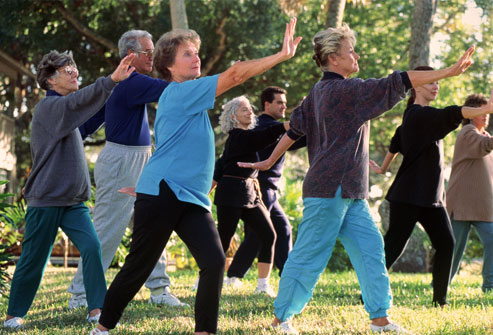
According to research, Tai Chi could reduce risk of falls in stroke survivors. It is a martial art form which originated in ancient China. Tai Chi involves relaxed breathing, physical movements as well as mental concentration.
In comparison to survivors getting usual care or taking part in a national exercise program, individuals practicing Tai Chi experienced the least falls.
According to the researchers learning how to find and keep your sense of balance after having a stroke can be a challenge. Tai Chi works well in improving upon both dynamic and static balance, and that’s essential to prevent falls. It’s easily to be found in many US cities and it is not too expensive.
Stroke survivors encounter 7 times more falls every year than healthy adults. Most of these falls could cause fractures, reduce mobility as well as increase the anxiety about falling that may lead to social isolation or dependency. Tai Chi has noticeably decreased the incidence of falls in healthy seniors. For the study, researchers enrolled 89 mostly ischemic stroke survivors having an average age of 70 who had experienced a stroke on average 3 years prior to starting the study.
The researchers said that Yang-style Tai Chi, as used in the research, is considered the most well known of 5 styles found in the US due to its focus on both physical as well as psychosocial health benefits.
The primary physical benefits of practicing Tai Chi are improved balance, better strength, flexibility as well as aerobic endurance. The psycho-social benefits comprise of significantly less depression, stress and anxiety, and a better quality lifestyle.
Image Source: Safe Movements and Be Hip Marketing Original article and pictures take www.ahealthblog.com site
Is Tai Chi effective with stroke survivors? Does Tai Chi help with balance and stability?
Tai Chi can help to prevent falls. Tai Chi is effective in developing both static and dynamic balance. Click, copy, download, save and share.
WHY IS TAI CHI IMPORTANT TO STROKE SURVIVORS?
Stroke survivors are very much prone to falls after stroke. Some statistics say that stroke survivors are likely to experience seven times as many falls each year than healthy adults. Falls can result in social isolation, depression dependence, and cause fractures, limited mobility and increase a fear of falling. Tai Chi can help bring increased mobility, balance and control. This is essential to stroke survivors.
WHAT IS TAI CHI?
Tai chi is an ancient form of exercise, about 2,000 years old. At one time more than 100 separate movements or postures were recorded. It is a physical discipline that involves a continuous series of controlled, most often slow movements. These movements are designed to improve physical and mental well-being. Tai Chi is also called t’ai chi ch’uan, or tai chi chuan.
It is estimated that more than 10 million people practice some type of t’ai chi every day in China. Currently in modern-day Tai Chi practice, there are two popular versions, of 18 movements and 37 movements respectively. Tai Chi is the one of the most popular forms of exercise in the world. Tai Chi students (or “players,” as they are called in China) often wear loose, comfortable clothing and either go barefoot or wear only socks or soft shoes on the feet. People in China usually practice Tai Chi outdoors in the morning, whereas people in the United States attend Tai Chi classes indoors.
Tai Chi classes typically start with a few minutes of standing meditation. This calms the mind, and helps participants to gather Chi or energy. Students then begin with warm-up exercises, and practice particular postures or forms. Yang-style Tai Chi, as practiced in the study, is the most popular of five styles used in the United States.
WHAT DOES THE RESEARCH TELL US?
According to the latest research presented at the American Stroke Association‘s International Stroke Conference 2013, Tai Chi may help to reduce falls in stroke survivors.
In the report from the American Stroke Association, out of the three control groups, those stroke survivors practicing Tai Chi had fewer falls than the other two groups of stroke survivors: those receiving usual care or those participating in a national fitness program for Medicare-eligible adults called SilverSneakers.®
Researchers recruited 89 stroke survivors – most of whom had ischemic strokes. The study was a randomized prospective study conducted outside of a hospital setting. The average age of participants was 70 years old. Forty-six (46) percent were women. Most of the participants were college educated, Caucasian, and living in or around Tucson, Arizona. The majority of the participants had had a stroke within three years prior to the research study.
The research study group was divided into three control groups: 1) 30 practiced Tai Chi, 2) 28 people took part in usual care and 3) 31 people participated in SilverSneakers®. The Tai Chi and SilverSneakers® groups included specific exercise classes lasting one hour, three times every week for twelve weeks. The usual care group received a weekly phone call and given written information about how they could participate in a community physical exercise activity.
During the twelve-week period, there were 34 reported falls in participants’ homes mainly from slipping or tripping: five falls in the Tai Chi group; 15 falls in the usual care group; and 14 falls in the Silver Sneakers group. Four people asked for medical treatment.
According to the principal researcher, Ruth E. Taylor-Piliae, Ph.D., R.N., and assistant professor at the University of Arizona College of Nursing in Tucson, Arizona,
“Tai Chi is effective in improving both static and dynamic balance, which is important to prevent falls. Tai Chi is readily available in most U.S. cities and is relatively inexpensive.”
The results of this study were significant. More research is needed to study the benefits of Tai Chi which can include: better balance, improved strength and balance, flexibility, endurance, increased energy, a sense of well-being, reduced anxiety.
_______________________________
This article is written by Jean Voice Dart, M.S. Special Education from Illinois State University.Jean is a published author and has written hundreds of health articles as well as hosting a local television program, “Making Miracles Happen.” She is a Registered Music Therapist, Sound Therapist, and Master Level Energetic Teacher, and is the Executive Director, founder and Health and Wellness Educator of the Monterey Bay Holistic Alliance. The Monterey Bay Holistic Alliance is a registered 501 (c) 3 nonprofit health and wellness education organization. For more information about the Monterey Bay Holistic Alliance contact us or visit our website at www.montereybayholistic.com.
Disclaimer:The Monterey Bay Holistic Alliance is a charitable, independent registered nonprofit 501(c)3 organization and does not endorse any particular products or practices. We exist as an educational organization dedicated to providing free access to health education resources, products and services. Claims and statements herein are for informational purposes only and have not been evaluated by the Food and Drug Administration. The statements about organizations, practitioners, methods of treatment, and products listed on this website are not meant to diagnose, treat, cure, or prevent any disease. This information is intended for educational purposes only. The MBHA strongly recommends that you seek out your trusted medical doctor or practitioner for diagnosis and treatment of any existing health condition.
Tai Chi Form of Master Moy Lin-Shin demonstrated by Doug Nettleton, student of Master Moy.
This form emphasis health benefits of tai chi exercise and not martial arts. There are a lot of stretch-out fully. This clip is in the DVD available at www.zwta.org
Included in the DVD there are 42 individual moves with 2 or 3 camera angles showing how each move is done.
Original article and pictures take s.ytimg.com site
Applications of 24 move Tai Chi form - 3rd clip on the 'Opening Move' - taken from a seminar given in June 2012 by Robert Agar-Hutton. Robert runs the Agar-Hutton Martial Arts Academy http://www.ahmaa.co.uk
Original article and pictures take s.ytimg.com site
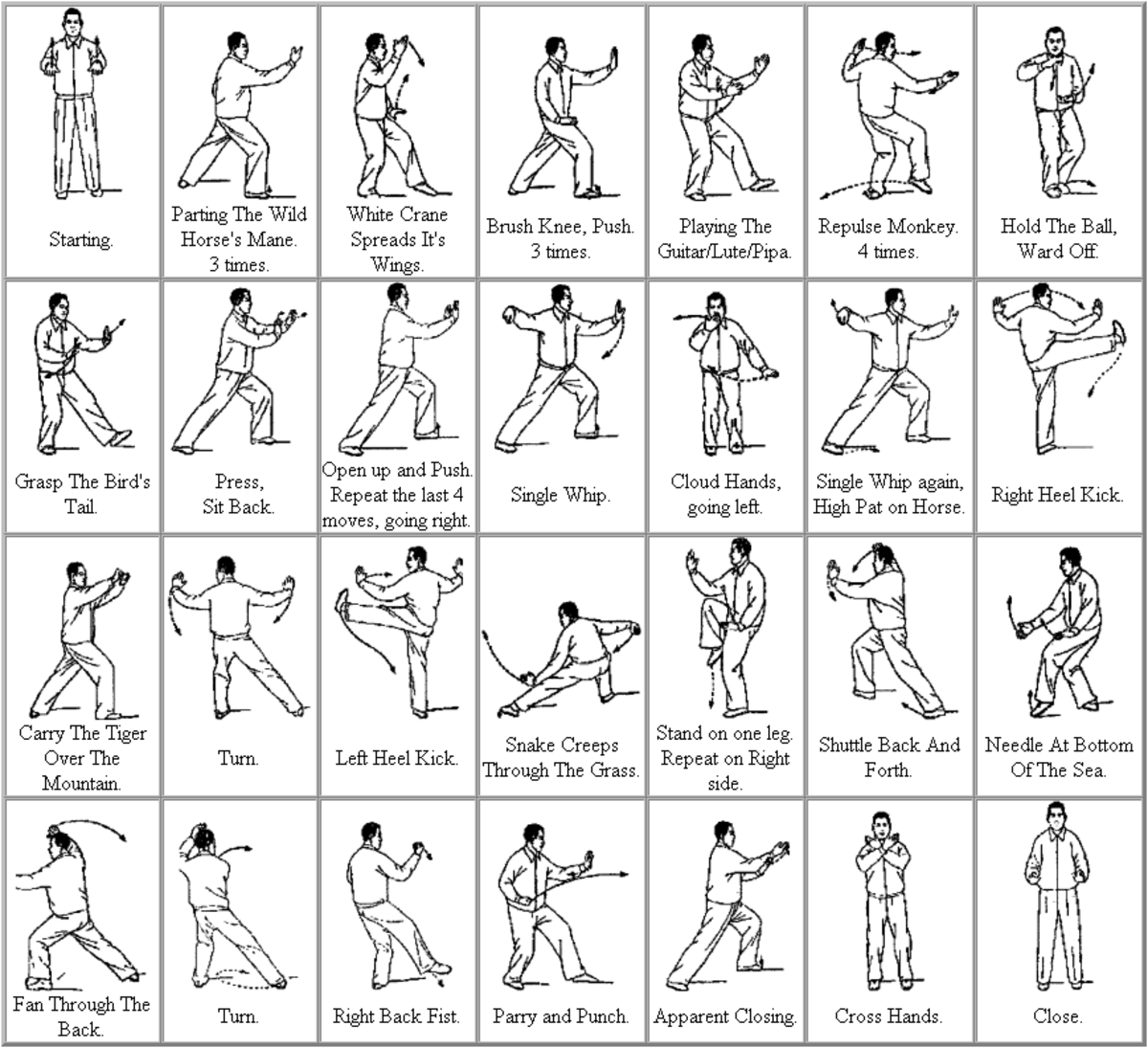
Tai Chi for Mind and Body This chart shows the 24 basic movements of Tai Chi.
Next time you’re running through a park sweating and gasping for breath, take a look across rolling lawns and open spaces – chances are you’ll see a small group of people performing what appears to be martial arts in slow motion.
No, they’re not rehearsing for a Swan Lake role. They’re practising a centuries-old Chinese exercise with stretching and flowing movements designed to strengthen mind and body.
Described as ‘moving meditation’, Chi Kung (traditionally spelt as Qi Gong) is practised by over 60 million people in China every day for its health benefits – in fact, it is considered such a holistic form of healing that it even forms a focal component of traditional Chinese medicine.
“Three essential elements make up the art of Chi Kung,” says Brisbane-based instructor, Julie Vear. “Working on the elements of posture, mindful movement and breathing promotes relaxation benefits and increased energy, even in the first lesson.”
Perhaps it’s because Chi Kung can be incorporated into daily life – on the bus, at your desk, at a café or while watching a movie – that its popularity is growing in Australia also.
“Ten years ago I would have only one or two people in some classes,” says Julie. “But now I teach mornings, evenings, weekends, in a studio or a park, in corporate offices or in hospital beds. The beauty of Qi Gong is that anyone can do it anywhere and still achieve profound health benefits.”
While Chi Kung shares similar concepts and movements to the more well-known Tai Chi, the two regimes are not to be confused.
“Chi Kung emphasises the flow of Chi (energy) through the acupuncture meridians in a less choreographed way than Tai Chi,” says Allan Kelson, a Foundation Member of the World Academic Society of Medical Qi Gong and international judge of Tai Chi competitions.
“That’s not to say Tai Chi is physically hard or strenuous, but remembering the movements and co-ordinating the mind with the body can be challenging for some and counteract the de-stressing nature of the exercises.”
The sport of Tai Chi has been refined to such a level it was pitched to be included as a new Olympic Sport at the Beijing Olympics in 2008. Unfortunately for its fans it wasn't accepted, but hundreds of tai chi masters did get to exhibit their skills at the opening ceremony.
“I estimate around one percent of Tai Chi enthusiasts take it to a competitive level, but it doesn’t matter if you don’t – you get a lot of benefit from Tai Chi and Chi Kung at all levels,” says Allan. “After years of training, you can even use it as martial art form.”
When you consider that Chi Kung needs no sports equipment, uniform, special grounds, or even a particularly good memory or fitness level, the ancient and elegant art form becomes a very attractive proposition.
“Chi Kung represents a holistic healing and de-stress technique that is easy and highly effective. Anyone can do it – even the stressed out corporate people who can’t find 10 minutes to eat lunch can find one minute to do Chi Kung at their desks,” says Allan.
“Taking time to do a one or five minute set means they can return to their work feeling as revived as if it were the start of the day.”
Allan has taught all types of people, from the Australian Tax Office staff, to Physical Education teachers, to women going through menopause, to professional footballers, to hip-hop street performers, to patients recovering from cancer.
“Even Frida from Abba flew me to Sweden to coach her for a month!” he says. “She really needed to relax and found that Chi Kung worked the best for her.”
The flow of Chi along the meridians in the body is believed to assist many health problems including stress, high blood pressure, poor posture, menopause, chronic fatigue and injuries such as whiplash or back pain.
Jin-Song Han, the founder of the Tai Chi Australia School in Victoria and Tasmania, reports Chi Kung can even reverse the growth of cancerous cells.
“There is a lot of research that shows Chi Kung helps cancer patients in their recovery,” he says. “It all comes back to the Chinese belief that allowing Chi to flow through the meridians and internal organs will release blocked Chi in the body. It is the blocked Chi that causes illness.”
It also helps slow the ageing process, a claim that Song supports himself. “I’m 46 but feel like I’m in my mid-twenties. As for looking younger, well, you can judge my photo on the website to see how old I actually appear!”
One of Julie’s students is a retired academic who was left unable to speak, read, write or think when debilitated by a stroke in 1998. Jeff Pittam discovered that Chi Kung helped him to concentrate on things other than his stroke, helped him relax, increased his motivation and aided his concentration and focus through the complexity of the forms.
“It also helps my balance,” he says. “Even before the stroke my balance wasn’t wonderful, but now it is so much better.”
But it’s not just the injured and infirm who benefit. Queenslander Geoff Osborn is a 33-year-old IT professional with a passion for rock climbing, swimming, martial arts, hockey and swimming. He turned to Chi Kung to achieve more endurance and balance in his life – both at work and in sport.
“I can recognise differences between movements I think I'm doing, and what I'm actually doing. Mostly we move from habit, and the Qi Gong helps me focus on the now-ness of movement,” he says.
The more relaxed approach to work and sport means Geoff is able to enjoy his activities for longer periods of time, without getting too wound up in day-to-day stuff.
“I found I got the most sense of health, wholeness and calmness from Qi Gong rather than sweating it out in a gym,” he says.
This is a concept that Julie reinforces in her teachings.
“Western fitness principles tend to focus on sweat, pain and muscle definition,” she says. “But this style of exercise is usually very linear and tends to view the body as a machine.”
It transpires that though people might think they’re getting a good workout on the treadmill while watching television, they’re actually disconnecting mind from body.
“Qi Gong practice emphasises mind/body integration and movements which massage and energise the internal organs as well as joints, muscle and bone health,” says Julie. “The brain loves patterns of movement and many Qi Gong forms help to balance the two hemispheres which enriches the neuro-muscular system.”
This, according to Julie, is vital to our well-being.
“The movements lead the Qi through the meridian system to every cell in the body making Qi Gong a powerful self-healing method,” she adds.
“It turns the flight/fight instinct into a deep state of relaxation, which in turn promotes the flow of Qi. Everything should be about balance – flexibility and strength; relaxation and activity; yin and yang. Working with the body and breath leads us to present moment awareness and a kinaesthetic awareness of ourselves. And thus it gives us a sense of balance and harmony in our world.”
Tai Chi 24 Form
Do-it-Yourself Tai Chi for Home or Office
Here are two simple exercises that can be done at your desk. If you have pre-existing medical conditions, consult your doctor prior to attempting any unsupervised Chi Kung.
“These sets are great for opening the lungs and getting some blood and Qi flow going through the body,” says Julie. “Remember, keep your movements slow and put emphasis on posture and breathing – keep it in rhythmic harmony with your body movements.”
Opening the wings
Inhale: float the arms up to shoulder level
Exhale: open arms out to sides (as if you were expanding around a large beach ball)
Inhale: slowly close arms (palms facing each other) as if compressing a ball
Exhale: when hands are about the size of a basketball in front of chest, lower to sides
Repeat 3 times
Gathering the energy of heaven and earth
Inhale: turn palms to face outwards, reach outwards to the sides, then over the head (palms turn down to face the crown)
Exhale: lower hands down centre line of body (fingertips a few centimetres apart)
Repeat 3 times
Original article and pictures take anitarevel.hubpages.com site