вторник, 4 августа 2015 г.

The Eyes and Tai Chi Training

The Eyes and Tai Chi Training

The use of the eyes in traditional Tai Chi Chuan is an often misunderstood or even unknown element of training in many schools. So then, what is the importance of the eyes in the training of Tai Chi Chuan, and how does one train the use of the eyes? This article will focus on the use of the eyes in order to build a strong foundation based upon the principles of movement in the beginning stages of training.


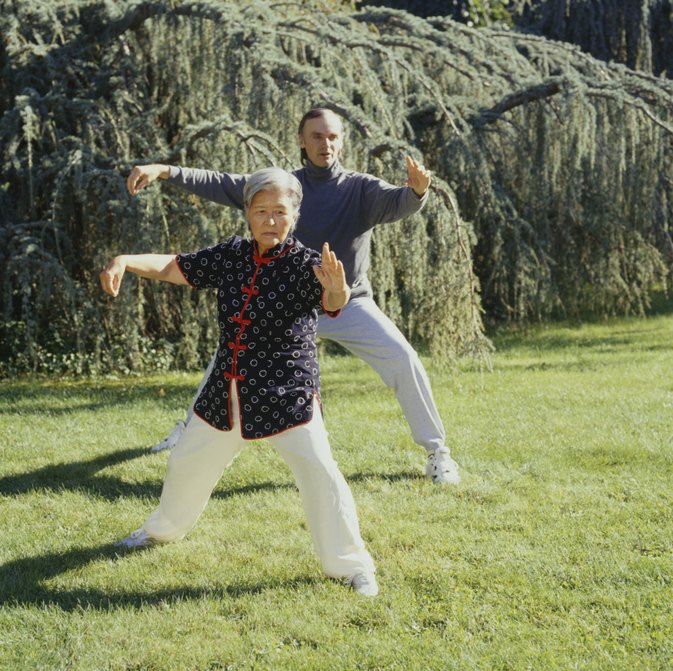
1 patti 060121 1Ds 8266

The proper usage of the eyes will help unite the mind and body. The eyes assist in training the body to move in the right manner according to the principles of Tai Chi Chuan. Generally, the body will turn towards the direction in which the eyes look out towards. In fact, if you are looking straight forward or in the wrong direction then the eyes may actually even be a detriment to the proper turning of the waist which we want to achieve in our practice of Tai Chi Chuan.


I was taught to follow the movement of the lead hand, then as the movement is finishing, “head up and look far away” as I was often instructed to do. Now, depending upon the specific style and intent of the move, what may be the lead hand for some may not be the lead hand for others. Basically, the lead hand is the hand that is “leading” the direction of the movement.


For example, let’s look at the movement “Brush Knee Twist Step” from the Traditional Yang style of Tai Chi Chuan starting from the previous posture “Play the Pipa”. (Stylistic differences will vary)


As the weight shifts into the right leg to allow the left leg to empty for the step, the right hand drops, circles out and up to the right. When the step is completed and the left heel touches the ground the right hand should have circled up to the area by the right side of the head (height of the hand will vary depending on style). The eyes will follow the movement of the right hand as it circles out and back closer to the body.


As the weight shifts into the left foot, the right hand and arm drop in front of the right chest and then releases away from the chest with the palm forward. The eyes will follow the movement of the right hand until the weight has shifted approximately 3/4 of the way forward at which point you look far away in the direction of the right hand.


One thing to note is that when the eyes are looking in the direction of the hand, they are not focused on the hands itself. The area of focus for the eyes is just beyond the the hand, and slightly ahead of the direction in which the hand is traveling. You are not focusing on one point, but rather it is a soft focus of that area.


So then the the focus is in the direction of the movement of the hands, and not the hands themselves. While the eyes follow the lead hand, the other hand is not forgotten. Try keeping both of the hands within the peripheral vision of the eyes. With training, the following of the hands become more of a mental focus rather than visual. When they eyes look far away, they look beyond the person that may be in front of you, past the wall that is behind them, and past the buildings and hills beyond that!


This method will help to train the body to move in a more unified manner. The use of “whole body” movement is one of the hallmarks of traditional Tai Chi Chuan. By following the movement of the hands with the eyes, it allows a process that starts to train the mind-intent. The eyes connect with the movement, the mind connects with the eyes, and with time the mind connects with the physical movement without the need of the intent of the eyes.


Some might argue that you should train to never take your eyes off your opponent, even an imaginary opponent while doing the slow form, and that this method violates that rule. I would argue that such an opinion is short-sighted. Using this argument, then one should not practice slowly either as slow movement would not be effective in a fight. The slow movements of the traditional long form are a method of training the body to move according to the Tai Chi principles and the methods of using the eyes in this manner are part of this training.


If you watch old films of some of the masters, sometimes you can catch them still doing this training of the eyes on some movements, maybe even looking down at the hands.


As one gains more experience and matures in their training of Tai Chi Chuan, the movement of the body becomes unified. The practitioner acquires what is known as a “Tai Chi body”. At this stage the body and the mind begin to be united. The waist starts to turn as needed for the movement at hand. The following of the hands with the eyes is not so important at this stage, as the mind intent is now trained. This becomes very important for when you will use your Tai Chi Chuan as a martial art. Even so, if you watch films of some of the old masters, sometimes you can catch them still doing this training of the eyes with some movements, maybe even looking down at the hands.


The Tai Chi martial artist does not want to take his attention away from their opponent. It would certainly not be a good idea to focus on the direction of your hand movement in a fight situation. When the practitioner of the traditional styles of Tai Chi Chuan journey through the training syllabus of their styles, all the different elements of the training syllabus take into account the training towards proficient martial skills and work together to achieve that goal.


Yang Zheng Ji wrote about the usage of the eyes in his family’s Yang style of Tai Chi Chuan. Here is a section from his book on the Yang style about the usage of the eyes. To see the full translation about the usage of the eyes in Yang style Tai Chi, click here to view the article.


Yang style Taijiquan is very particular about the method of using the eyes. Tradition has it that when Yang Cheng Fu pushed hands or engaged in combat, when emitting jing would look at the opponent and the opponent on receiving the strength would fall in the direction which he looked. Looking at Yang Shao Hou’s precious image, his eyes appears to have brightness shooting forth, this is a result of long term training fully concentrating on the eyes as well as the internal qi.

How can the eyes help? It is more than just having the direction you look towards helping to guide the movements of the body. Using the eyes in the proper method will also help you remain consistent in keeping the focus of your attention on the training of your movements with having less distraction from your practice. The use of the eyes in this method is essential in building the connection of the mind intent, the mind leading the body, and ultimately a higher level of achievement in Tai Chi Chuan.


Original article and pictures take slantedflying.com site

вторник, 14 июля 2015 г.

The Difference Between Tai Chi, Qi Gong, and Chai Tea

The Difference Between Tai Chi, Qi Gong, and Chai Tea

i-know-chai-tea

A few months back, I was on a business trip with my wife. After a long day at an alternative health conference, we decided to stop in a cafe for some refreshments. Just for fun, I asked the server for a “Tai Chi latte”.


I figured it was worth a shot. I didn’t get a cosmic latte, but I did get a delicious cup of Chai Tea, which was almost as good.


If you don’t get the joke, then keep reading. You will soon. Along the way, you’ll also learn about the difference between Qi Gong and Tai Chi. As a bonus, you may also develop a taste for chai tea.


If you’re confused about the difference between Tai Chi and Qi Gong, don’t fret. You’re not alone. Even among Tai Chi teachers (mediocre ones, at least) there is a ton of confusion and misunderstanding. So grab a cup of chai tea, relax, and read on. You’re sure to learn a few things.


Definitions


Let’s start with some working definitions so that we have a good springboard to jump from:


  • QI GONG is the ancient Chinese art of energy cultivation. It is especially beneficial for boosting health, vitality, internal power, and mental clarity.

  • TAI CHI is a form of Chinese Kung Fu. It is a martial art that emphasizes softness, internal energy development, and spiritual cultivation. It also happens to be good for the health.

  • CHAI TEA is a delicious, spicy beverage from South Asia. It can be enjoyed with or without milk.

chai-tea-tai-chi

So why is there so much confusion out there? Why, for example, does WebMD offer an overview of Tai Chi and Qi Gong — but nowhere do they even mention that Tai Chi is a martial art? I’m not sure how they could overlook such a simple and important fact. Perhaps they need a delicious cup of Chai Tea to help clear their minds?


Terminology


Before we go any further, we need to fix some terminology. When people say Tai Chi, what they really mean is the art called Tai Chi Chuan.


The word “Chuan” (拳) means Kung Fu or Martial Art. So Tai Chi Chuan really means Cosmos Martial Art or Cosmos Kung Fu. In other words, it is an martial art that follows the natural laws of the cosmos.


tai-chi-chuan-characters

Most people leave off the Chuan, especially in America. The term Tai Chi has become ubiquitous. It has gotten to the point where if you say Tai Chi Chuan, people look at you funny. After scratching their heads for a minute, they eventually say, “Oh, you mean Tai Chi!”


When you say “Tai Chi”, it’s technically incorrect. But that’s the phrase in common usage, so good luck trying to change it. Believe me — I’ve tried. If you can’t beat ’em, join ’em.


In an effort to better educate people about these arts, I myself have adopted the term Tai Chi. That’s the only way people understand you. And if they don’t understand you, then you’ll never be able to educate them, no matter how much free Chai Tea you offer them.


Nevertheless, it’s important for us to understand the difference between Tai Chi (a philosophy) and Tai Chi Chuan (an internal martial art). I’ll explain more about this later.


Spelling


But first, let’s talk about spelling. Chinese is really confusing for Americans. The fundamental problem is simple. How the heck do you spell a word that looks like this:


zen-character

Well, there’s more than one way to skin a cat, and there’s more than one way to spell a Chinese word in English. Over the years, there have been different attempts at phonetically spelling Chinese words. The two most widely known spelling systems are called Wade-Giles, and Pinyin.


Pinyin vs. Wade Giles vs. Starbucks


The Pinyin spelling system was developed in the 1950s. Today, it is the official way to transcribe Chinese characters into Western writing. But it didn’t become the official system until the 1980s.


Before the 1980s, other systems were also used, notably the Wade-Giles system.


If you know both systems, you know that Pinyin is the superior one. But that doesn’t matter.


People typically just use what they are familiar with. And in America, people are more familiar with Wade-Giles. That’s why you’re used to seeing the spelling “Tai Chi” (Wade-Giles) as opposed to “Tai Ji” (Pinyin).


If you write an email to a friend and say that you’re taking Tai Ji, she probably won’t understand what you mean. There’s a good chance she’ll think you’re at Starbucks drinking Chai Tea. In that case, she’ll probably be wondering why you didn’t invite her to join you.


If you write that you’re taking Tai Chi, she’ll immediately have a clearer picture of what you mean. Most Americans, without even knowing it, recognize the Wade Giles spelling for Tai Chi.


What about Qi Gong? The Wade Giles spelling is Chi Gong. But today, the Pinyin spelling (Qi Gong, or Qigong) is more widely recognized.


Why? Probably because the art of Qi Gong didn’t make it to America until much later than Tai Chi. Whereas Tai Chi came here in the 1960s, it wasn’t until 20-30 years later that people started to hear about Qi Gong.


Although Qi Gong is more widely recognized, it is also more widely mispronounced. Actually, Tai Chi is also widely mispronounced. Chai Tea, perhaps thanks to Starbucks, is usually pronounced correctly.


Dialects


Before we talk more about pronunciation, let’s quickly talk about dialects.


There are dozens of them in Chinese, but the two main dialects are Cantonese and Mandarin. Of the two, Mandarin has been adopted as the national dialect of China, and it is becoming the worldwide standard for speaking Chinese.


I’ll use the Mandarin pronunciation for that reason, and also because it’s the one that I speak best.


Keep in mind that it’s only the dialect that varies; the writing remains the same. For example, if you had a newspaper article in Chinese, both the Cantonese and the Mandarin speaker would be able to read and understand it. But if they read it out loud, it would sound completely different.


There is no perfect comparison for English speakers. The best comparison would be someone with a thick Scottish accent who you could hardly understand. You could both read the same books, but reading those books out loud would sound pretty different.


Pronunciation


Here are the correct pronunciations using the Mandarin dialect:


  • QI is pronounced “chee” (rhymes with “free” and sounds like the word “cheese” without the ending. )

  • GONG is pronounced “gung” (rhymes with “hung”, and sounds a bit like the word “gunk”)

  • TAI is pronounced like the English word “tie” (the thing men wear around their necks).

  • CHI is pronounced like the English word “gee” (as in “gee whiz”).

Don’t make the mistake of saying “Key Gung” for Qi Gong. The first word should sound like “chee”, not “key”. This one annoys me to no end when I hear it from instructors. I would rather them “Chai Gong” than “Key Gong”. At least Chai is tasty.


Most people also also mispronounce the “Chi” in Tai Chi. It should sound like the letter “G”. It should NOT sound like the “chee” from Qi Gong. But, since it’s already in common usage, it’s a tough battle.


Translation


If you thought that the Chi from Tai Chi meant energy, then prepare to have your mind blown. The “Qi” (chee) from Qigong does indeed mean energy; but the Chi from Tai Chi does not.


Don’t worry. You’re not alone if you thought this. I would venture to guess that 60% of people who practice Tai Chi are misinformed. Unfortunately, the same is true of many Tai Chi teachers.


In fact, I once met a Tai Chi teacher who tried to argue with me on this point. He thought I was crazy to suggest that the “Chi” from Tai Chi didn’t mean energy.


He’s entitled to his own opinion, of course, but not his own facts. If you encounter a teacher like this, it’s probably best to go find a new one.


  • The Chinese character Qi (氣) means energy. That much is simple.

  • The Chinese character Chi (極,) means ultimate. That’s a literal translation. When combined with the word Tai (太), it then means “Cosmos”.

So technically, Tai Chi (or Tai Ji in the Pinyin spelling) means “Cosmos”. The typical translation of Tai Chi Chuan is “Grand Ultimate Fist”. It’s an awful translation. It shows a lack of understanding of classical Chinese, as well as Chinese philosophy. As I said earlier, the translation should be Cosmos Martial Art or Cosmos Kung Fu.


Of course, Tai Chi Chuan is based on the flow of Qi (energy), hence the confusion. To eliminate the confusion, a new spelling of Tai Chi Chuan is often used: Tai Ji Quan. This is more correct, but as I said, it’s not widely recognized by Americans.


What about Chai Tea? Well, be prepared to have your mind blown AGAIN! Guess what the Hindi word for tea is? Yep. It’s chai. So when you say “Chai Tea”, you’re actually saying “Tea Tea”. Which is fine, since tea is so delicious.


The Philosophy of Tai Chi


The Chinese philosophy of Tai Chi is an ancient one, and it predates the art of Tai Chi Chuan by many centuries. This philosophy permeates Chinese culture and history. The symbol for this philosophy is one that you instantly recognize:


yin-yang-sepia

This symbol is called the Tai Chi Tu (Tu just means “symbol” or “diagram”). This concept was adopted by Zhang San Feng, the founder of Tai Chi, not invented by him. For example, long before Zhang San Feng was born, the Tai Chi philosophy was already in use in Chinese medicine.


So technically, if you use Tai Chi without the Chuan at the end, then it’s not clear if you’re referring to the philosophy, or to the martial art. And since Tai Chi Chuan incorporates the philosophy of Tai Chi, it gets even more confusing for many people. But now that you understand the difference, you can educate them, perhaps over a delicious cup of Chai Tea.


Which One Do You Want?


australian-health-qigong

What if you wanted to order a delicious Chai Tea latte, but you didn’t know what it was called? Even worse, what if you didn’t know that such a thing existed! This is exactly what happens to a lot of Tai Chi students.


Many people go to learn Tai Chi, but what they are really looking for is Qi Gong. They just want some simple, enjoyable exercises to improve their health. They want results, and fast. They don’t want to learn long, complex routines, and they certainly aren’t interested in martial arts. But that’s exactly what they’ll get if they go learn Tai Chi.


Qi Gong is a better option for most people, especially in the beginning. A simple Qi Gong exercise like Lifting The Sky gives you a powerful tool for cultivating health, without all the difficulty of Tai Chi. This is why all of my students begin with Qi Gong. No exceptions.


But later, after practicing Qi Gong for a few months, you may change your mind. You may want to learn something that builds strength, flexibility, and balance in addition to health. You may also want to have the option of blocking a punch or neutralizing a grab should you ever need it.


The Beauty of Tai Chi


sunset-single-whip-anthony

Why might you want to learn a martial art like Tai Chi? In my experience, Tai Chi is the perfect martial art for people who think they’re not interested in martial arts. Why? Because it emphasizes using internal power rather than external strength; because it teaches you to use softness rather than aggression; because it teaches you to relax rather than tense.


These skills are not only useful in fighting, but also in daily life. For example, being able to relax under pressure is something that could easily save your life on the highway. In fact, it saved mine years ago when I it helped me to avoid an oncoming truck that was trying to pass a tractor trailer on a small, country road.


If you’re already thinking that Tai Chi sounds like the perfect art for women, as well as non-aggressive men, then you’re exactly right. As a small-sized man (5’8″ and 145lbs), this is why I finally settled on on Tai Chi as the perfect martial art for me. After trying just about every martial art under the sun, I finally accepted that I would never be able to compete with big strong guys when it comes to strength.


Luckily, I don’t have to.


Many of my students are bigger, stronger, and younger than me. Why do they have so much trouble handling me in sparring? Because I don’t play their game.


I don’t use strength. I use Tai Chi.


My Tai Chi is powered by the internal strength that I develop through Qi Gong. Because of that internal energy, I can handle a big and strong attacker despite my small size. And more importantly, because Tai Chi makes me relaxed and peaceful (as opposed to tense and aggressive, like many martial arts), I can still sit down, relax, and savor a delicious cup of Chai Tea.


Drop me a comment below if you have any questions. And if you haven’t already gotten your free e-books and your free lesson, then make sure to grab them here.


Best regards,

Sifu Anthony


I’m Anthony Korahais, and I used qigong to heal from clinical depression, low back pain, anxiety, and chronic fatigue. I’ve already taught thousands of people from all over the world how to use qigong for their own stubborn health challenges. As the director of Flowing Zen and a board member for the National Qigong Association, I'm fully committed to helping people with these arts. In addition to my blog, I also teach online courses and offer in-person retreats and workshops.


Original article and pictures take i0.wp.com site

среда, 8 июля 2015 г.

The Difference between Tai Chi & Qigong

The Difference between Tai Chi & Qigong

Often at retreats and from students the question arises; "What is the difference between qigong and tai chi?" In this article we will explore this question, understanding that this is a more complex matter than it seems, and cannot be fully answered in a few simple sentences. This is because there are literally hundreds of styles of qigong (chi gung) and five major schools of tai chi with numerous variations.


This is a lot of tai chi and a lot of qigong from which to make a simple statement. Accurately distinguishing between them is like separating out all the color flows and shadings within a single beautiful but complex painting.


Energy Gates Qigong Instructor Training in England

There is another issue that muddies the waters and makes answering this qigong question difficult. Many obtain information on the differences and similarities from a local qigong or tai chi instructor, or from a Chinese instructor who cannot translate from one culture to another easily, or who may not want to share what has been secret, etc.


The trouble is that instructors may only know details about the specific type of qigong they do, and not other types or its relationships to chi-energy arts as a whole. This is not unusual, just as in the field of science, biologists often don't know that much about civil engineering, and vice versa. As a result, misinformation and half-truths abound.


Anything of truly great value always has great subtlety, whether or not it looks simple and easy on the surface. Some other differences not mentioned here are too technical, and will not be covered as they may confuse rather than clarify. To bypass complex technical issues, just as is done when you want common sense to tell you how computers work, we will look at the four most commonly given simple answers to the original question—what is the difference between tai chi and qigong?


Each answer gives a progressively more complete answer. All are only partial truths, but at least they are the most accurate answers that can be given without going into excessive detail.


Level 1: Tai chi is a form of qigong, or, qigong is tai chi's parent


This is the most common answer.


The accurate part of the statement is this: the invisible chi or internal power aspects included within the tai chi part of tai chi chuan derive directly from one branch of the 3,000-year-old Taoist qigong tradition, whereas Taoist qigong does not come from tai chi. However, the statement is misleading because it omits Buddhist or Confucian qigong, which have little in common with tai chi’s roots in Taoist qigong or Taoism. Learn more about this in the Five Branches of Qigong.


This answer also involves a common error in logic: since to the Western ear it sounds as if the word energy is contained in both words, they must mean the same thing. Right? Wrong! The qi or chi of qigong means energy, the chi of tai chi does not. In tai chi the chi means 'ultimate'.


To add to the confusion, the chi in tai chi and qigong are almost universally pronounced by Westerners as “chee,” which is accurate for qigong and inaccurate for tai chi (“gee”) chuan. Those who commonly both see and mispronounce tai chi as chee also tend to assume both mean the same thing, which they do not.


Confusion escalates and gets reinforced when you find out both tai chi and qigong work with chi-energy (however often in different ways) and have similar benefits. Adding to the potential confusion, although many people may have heard the name, most in the West have only seen tai chi or qigong in still photos, on television, or at the cinema.


When shown visually, if these arts are even named, usually narrators inaccurately call both tai chi, because they don’t know the difference. This commonly leaves the impression that qigong is tai chi or vice versa. The public subsequently has an association that slow-motion movements + Chinese something-or-other = tai chi. Consequently, the public and the media are more familiar with the name tai chi than qigong, and commonly do not make much distinction between them.


Tracing Acupuncture Lines with Qigong


The accurate part of this statement is that qigong has specific techniques or styles that are particularly effective for specific diseases beyond the ken of tai chi. For instance, there are specific qigong methods for helping those with cancer and mitigating the effects of radiation and chemotherapy. In China one set used for this was Dragon and Tiger Medical Qigong.


The misleading part is that although all tai chi powerfully heals and maintains health, only a tiny fraction of participants do any of its practical martial arts techniques. On the other hand, qigong also has within it practices for increasing the power you need to make self-defense techniques effective, even though qigong per se does not include the fighting techniques themselves.


Although the first part of this answer can be a little murky, the second part is relatively clear. Both tai chi and some (but not most or all), aspects of qigong do what they do using flowing, fluid, slow-motion movements. To an untrained eye, all regular, smooth, slow-motion movements would tend to look the same, no matter how different they are in reality. Yet a casual observer would be able to clearly distinguish between different kinds of movements done at a faster speed. Nevertheless, slow-motion movements are only fast movements done slowly.


The second part of the answer is this: just because tai chi and qigong movements are done in slow motion does not mean that their movements must basically be the same. There is an exceptionally wide range of different movements, each requiring different kinds of physical coordination. Moreover, although the slow-motion movements of different tai chi styles may be somewhat different, on the whole they are basically variations of the same theme.


In contrast, slow-motion movements in a particular qigong style can look radically different from either tai chi or other qigong systems. Take, for example, two well-respected members of the Taoist qigong tribe—tai chi chuan and Wild Goose qigong. Wild Goose has as many moves as a tai chi long form, yet looks radically different from tai chi. Likewise, non-Taoist medical and Buddhist qigong systems also contain movements not to be found in tai chi or each other.


There are many ways to move the body, as can be seen in the differences in the dance world between styles of ballet, ballroom, tap, disco, and hip-hop. Like dance styles, within the hundreds of qigong schools you can move in other ways besides regular, smooth, slow-motion movements. There are techniques which involve shaking, jumping up and down, vibrating, shouting, alternating speed with staying dead still, flapping like a bird, squatting flatfooted, and even moving freely and spontaneously in ways almost too strange to describe, while making weird, otherworldly sounds.


Above and beyond moving, qigong also has primary methods that specialize in:


  • Standing, either with your arms by your sides or in all kinds of positions.
  • Sitting, both on the floor and in chairs.
  • Lying down in various positions.
  • Sexual and all kinds of human interactions, including talking.

Although tai chi may use standing, sitting, and lying down techniques, they are ancillary to the primary technique of slow-motion movements for health, longevity, and stress management.


Using the Beak Hand in Dragon and Tiger Qigong to Move Chi


Why are you doing these movements in the first place? From a purely physical viewpoint the body needs to move and exercise to prevent problems. A different perspective is that the movements are designed to specifically promote the flow of chi within you. Therefore, if you want to generate a specific chi flow in your body, one type of movement may make it easier whereas others may make it harder.


Tai chi is based upon the potential to fully incorporate all 16 parts of the neigong system seamlessly into every movement; qigong normally tends to partially utilize some, but not all, of the 16 neigong components in any specific movement or entire form. In tai chi, although some specific moves may make it slightly easier to initially learn or solidly assimilate any one of the 16 components, for an advanced practitioner, the other 15 are ideally always present and integrated within each and every move of the form.


Some Taoist qigong schools will teach the entire 16 components initially through a series of short qigong forms, each of which emphasizes two or three specific parts of the neigong, until the final form which encompasses all 16. After this the student has a complete background within which to engage learning the full energetic potential of tai chi. The Energy Arts Qigong Exercise Program, for example, does this in his teaching work, using five very short qigong sets plus Dragon and Tiger Qigong, the first five of which initially emphasize only one to three components of the entire 16 neigong components.


Qigong also often separates specific chi functions into separate movements or different forms. For example, while doing a qigong form, during one move you might direct energy through a specific acupuncture meridian (the lung or heart meridian for example), and in the next move you might direct energy through a different meridian. Or in one move, you might draw energy through a particular acupuncture point in your body, and in the next release the energy from a different one. Or within the same form during one series of moves you could deliberately only exclusively activate and work with one of your three tantiens or centers of energy, and later within the same form, in a different series of moves,deliberately solely activate a different tantien and its functions, or other specific elements of the Taoist neigong system.


Ideally, in tai chi, an experienced practitioner will not separate these energy practices in this way. So that provides you with four different ways of looking at the question. All have truth in them and help elicudate the difference between qigong and tai chi.


Article extracted from Tai Chi Health for Life Book. To order this book click here.


Original article and pictures take www.energyarts.com site

понедельник, 22 июня 2015 г.

The Best Tai Chi DVDs for Beginners

The Best Tai Chi DVDs for Beginners

Although it is better for beginners to attend a tai chi class, a good DVD can undoubtedly help to keep your practice going at home. As a rule, you should look for a DVD that sticks to beginners' sequences, provides clear explanations of each move and allows you to establish a daily routine. DVDs that blend tai chi with qigong provide dual benefits.


Video of the Day


A Beginners' Guide to Short Form Tai Chi


Renowned teacher, Chris Pei's "Tai Chi for Beginners," provides you with eight classes covering the basics of the Yang style tai chi 24 form, which is a simplified version of tai chi based on 24 movements. His clear step-by-step instructions and the low-impact routine make his classes particularly suited to older learners and people with less mobility.


Qigong For Energy


Qigong is the basis of the martial arts family that includes tai chi and kung fu. Qigong's simple moves focus on drawing in energy and revitalizing all of the body's systems and are easier to learn than a tai chi sequence, making qigong a good starting point.


Samuel Barnes' "Element: Tai Chi for Beginners" provides a blend of qigong and tai chi that ultimately gives you a flowing sequence of moves. Barnes uses a two-prong technique of teaching the qigong basics first before moving on to tai chi. Scott Cole, well-known for his media appearances, has a number of tai chi DVDs. His "Discover Tai Chi for Beginners" gives you a series of well-directed blend of simple tai chi and qigong exercises that allow beginners who have never attended a class to get started.


Original article and pictures take www.livestrong.com site

среда, 20 мая 2015 г.

The 12 best Tai Chi books

The 12 best Tai Chi books

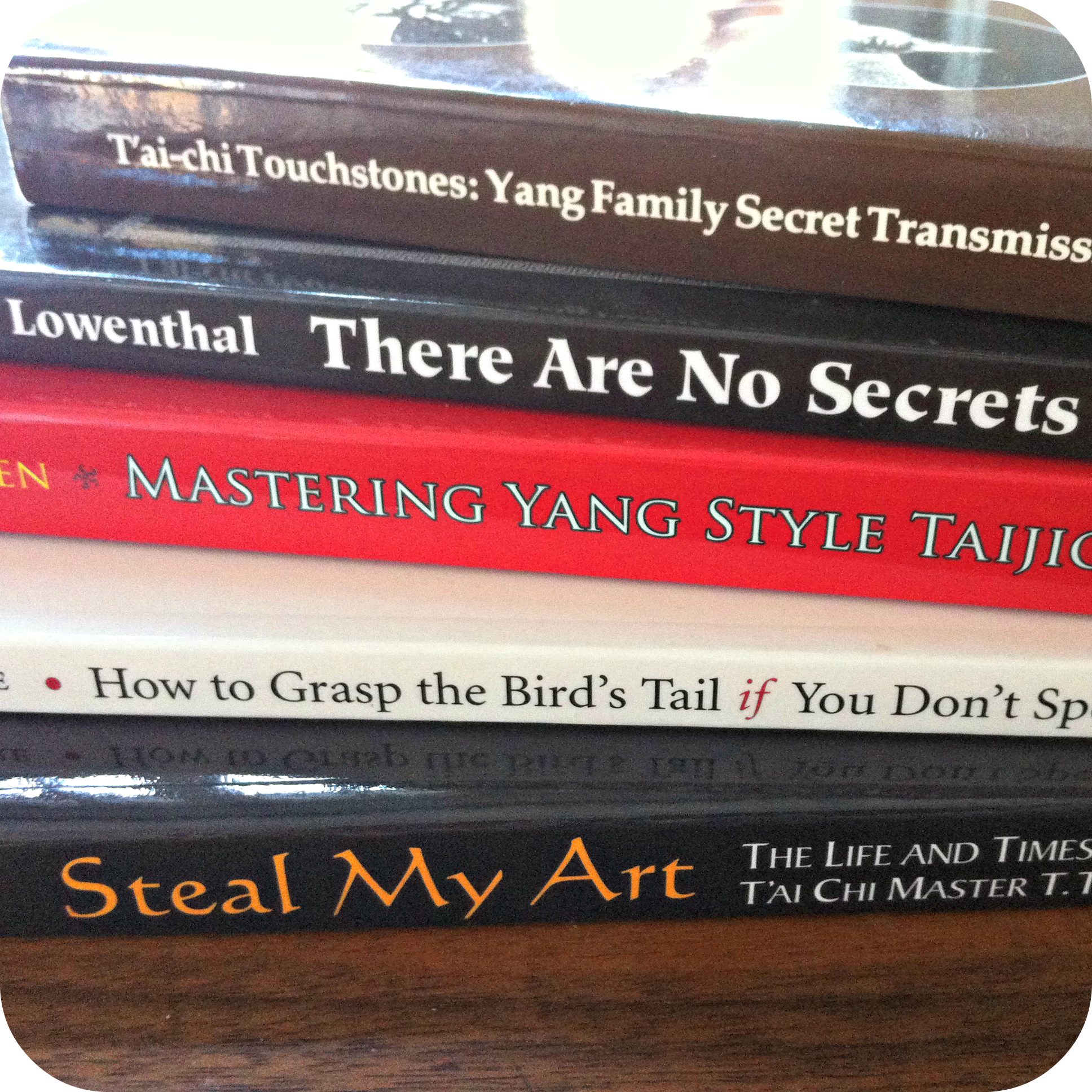
As I just started reading English books on Tai Chi Chuan (I am from Germany), I wanted to find out what are the best Tai Chi books. So I made my own wishlist of best Tai Chi books based on several recommendations I found all over the internet:


The best Tai Chi books


So if you plan to get more into Tai Chi Chuan, why don’t you choose one of these books and start reading?


If you want to buy any of those great books about Tai Chi, click on the titles above or the links below:


And of course I will keep you updated on the books I read. Some of them have already arrived. I am looking really forward to dive into them!


Qialance: the best Tai Chi books
Qialance_best Tai Chi books

So I think within the next couple of years you will find MANY book reviews here at Qialance! And maybe you are also interested in the best Qi Gong books!


Happy Qi!


Angelika


P.S.: I would like to add that I wrote my first book about Tai Chi! It is The Taijiquan & Qi Gong Dictionary! I think it is great for any beginners and will help you to get an idea of many words and concepts that are covered in the other books. And I am proud to say that it has 5-stars ratings on Amazon!


The Taijiquan & Qi Gong Dictionary

Original article and pictures take qialance.com site

четверг, 7 мая 2015 г.

The 108 moves of the Tai Chi set

The 108 moves of the Tai Chi set

To access a printable PDF file of the 108 moves, click here.


Taoist Tai Chi: Single Whip
Single Whip


1. Opening of Tai Chi

2. Left Grasp Bird's Tail

3. Grasp Bird's Tail

4. Single Whip

5. Step Up and Raise Hands (very similar to Strum the Pei Pa)

6. White Stork Spreads Wings

7. Brush Knee (left)

8. Strum the Pei Pa

9. Brush Knee and Twist Step (left)

10. Brush Knee and Twist Step (right)

11. Brush Knee (left)

12. Strum the Pei Pa

13. Brush Knee and Twist Step (left)

14. Chop with Fist

15. Step Up, Deflect, Parry, Punch

16. Appear to Close Entrance

17. Cross Hands

18. Carry Tiger to Mountain

19. Whip Out Diagonally (often called Standing Palms in other styles of tai chi)

20. Fist Under Elbow

21. Go Back to Ward Off Monkey (right)

22. Go Back to Ward Off Monkey (left)

23. Go Back to Ward Off Monkey (right)

24. Flying at a Slant

25. Step Up and Raise Hands (very similar to Strum the Pei Pa)

26. White Stork Spreads Wings

27. Brush Knee (left)

28. Push Needle to Sea Bottom

29. Fan Penetrates through the Back

30. Turn and Chop with Fist

31. Step Up, Deflect, Parry, Punch

32. Step Up to Grasp Bird's Tail

33. Single Whip

34. Move Hands Like Clouds (five times)

35. Single Whip

36. Reach Up to Pat Horse

37. Separate Foot to Right

38. Separate Foot to Left

39. Turn and Kick

40. Brush Knee and Twist Step (left)

41. Brush Knee and Twist Step (right)

42. Step Up and Punch

43. Turn and Chop with Fist

44. Step Up, Deflect, Parry, Punch

45. Right Foot Kick

46. Hit Tiger at Left

47. Hit Tiger at Right

48. Right Foot Kick

49. Strike Ears with Fists

50. Left Foot Kick

51. Turn and Kick

52. Chop with Fist

53. Step Up, Deflect, Parry, Punch

54. Appear to Close Entrance

55. Cross Hands

56. Carry Tiger to Mountain

57. Whip Out Horizontally

58. Parting Wild Horse's Mane (right) (similar to Flying at a Slant – 24)

59. Parting Wild Horse's Mane (left)

60. Parting Wild Horse's Mane (right)

61. Parting Wild Horse's Mane (left)

62. Parting Wild Horse's Mane (right)

63. Left Grasp Bird's Tail

64. Step Up to Grasp Bird's Tail

65. Single Whip

66. Fair Lady Works Shuttles (left)

67. Fair Lady Works Shuttles (right)

68. Fair Lady Works Shuttles (left)

69. Fair Lady Works Shuttles (right)

70. Left Grasp Bird's Tail

71. Step Up to Grasp Bird's Tail

72. Single Whip

73. Move Hands Like Clouds (seven times)

74. Single Whip

75. Creeping Low Like a Snake

76. Golden Cock Stands on One Leg (left)

77. Golden Cock Stands on One Leg (right)

78. Go Back to Ward Off Monkey (right)

79. Go Back to Ward Off Monkey (left)

80. Flying at a Slant

81. Step Up and Raise Hands (very similar to Strum the Pei Pa)

82. White Stork Spreads Wings

83. Brush Knee (left)

84. Push Needle to Sea Bottom

85. Fan Penetrates through the Back

86. White Snake Turns and Puts Out Tongue (very similar to Turn and Chop with Fist – 30)

87. Step Up, Deflect, Parry, Punch

88. Step Up to Grasp Bird's Tail

89. Single Whip

90. Move Hands Like Clouds (three times)

91. Single Whip

92. Reach Up to Pat Horse

93. Cross Hands to Penetrate

94. Turn and Kick

95. Chop with Fist

96. Brush Knee and Punch

97. Step Up to Grasp Bird's Tail

98. Single Whip

99. Creeping Low Like a Snake

100. Step Up to Seven Stars

101. Retreat to Ride Tiger (similar to Fair Lady Works Shuttles)

102. Turn Around to Sweep Lotus

103. Draw Bow to Shoot Tiger

104. Chop with Fist

105. Step Up, Deflect, Parry, Punch

106. Appear to Close Entrance

107. Cross Hands

108. Closing of Tai Chi


The Foundation Exercises


1. "Air Balls": Basic forearm rotations

2. "Push and Pull": rotation of the arms in front of the body

3. Torso rotations

4. Arm separations

5. "Tor Yu" (Spine turning)

6. "Dan Yu" (Spine stretching)


The 108 moves presented in my DVD - as well as the foundation exercises - are exactly the same as those I was taught by Master Moy Lin Shin through his worldwide organization.


- A 12-minute recording calling out each Tai Chi move in time during the set (mp3)

- A script of the video explaining each move (pdf )

More info


Original article and pictures take www.108taichimoves.com site

пятница, 17 апреля 2015 г.

The 10 essential Yang style Tai Chi principles in Chinese & translated

The 10 essential Yang style Tai Chi principles in Chinese & translated

What I like about Tai Chi Chuan (Taijiquan) is that even when we practice different forms and squabble over how to do them correctly, the underlying principles are the same for everyone. The 10 Tai Chi principles are the very basic principles. And they are the same for EVERYONE practicing Yang style Tai Chi.


These Yang style Tai Chi principles where transmitted orally from Yang Chengfu (楊澄甫; 1883-1936) to his student Chen Weiming (陈微明; 1881-1958). And luckily, Chen Weiming wrote down the principles and they where then published in the book “T’ai-chi ch’üan shu” (The art of T’ai-chi ch’üan; 太 極 拳 術) in 1925.


During the next months I want to study these essentials of Tai Chi. (And of course, I will share my insights with you!) To start, I put together the Yang Chengfu Tai Chi principles in Chinese and I added various translations. Because even though the principles are really simple, the translations vary slightly. And I think that is interesting, to see the different angles and emphasizes. Even without any further explanation and comments on what the principles mean, that will hopefully help you to grasp the essence of the principles of Tai Chi.


So for each principle you will see:


中文 (the Chinese characters)


  1. Pinyin
  2. Translation by Douglas Wile as in T’ai Chi touchstones: Yang Family Secret Transmissions
  3. Translation by Louis Swaim as in Mastering Yang Style Taijiquan
  4. Translation by Jerry Karin from the Yang Family Homepage: Ten Essentials of Tai Chi Chuan

Now let’s start my principles series with the list of the 10 essentials of Tai Chi Chuan:


10 Yang style Tai Chi principles


  1. 虛靈頂勁
    1. Xu ling Ding Jin
    2. The Energy at the Top of the Head Should Be Light and Sensitive
    3. An intangible and lively energy lifts the crown of the head
    4. Empty, Lively, Pushing Up and Energetic
  2. 含胸拔背
    1. Han Xiong Ba Bei
    2. Sink the Chest and Raise the Back
    3. Contain the chest and raise the back
    4. Hold in the Chest and Slightly Round the Back
  3. 鬆腰
    1. Song Yao
    2. Relax the Waist
    3. Relax the waist
    4. Relax the Waist
  4. 分虛實
    1. Fen Xu Shi
    2. Distinguish Full and Empty
    3. Distinguish insubstantial and substantial
    4. Separate Empty and Full
  5. 沈肩墜肘
    1. Chen Lian Zhu Zhou
    2. Sink the Shoulders and Drop the Elbows
    3. Sink the shoulders and drop the elbows
    4. Sink the Shoulders and Drop the Elbows
  6. 用意不用力
    1. Yong Yi Bu Yong Li
    2. Use the Mind and Not Strength
    3. Use consciousness, not strength
    4. Use Intent Rather than Force
  7. 上下相隨
    1. Shang Xia Xiang Sui
    2. Unity of the Upper and Lower Body
    3. Upper and lower follow one another
    4. Synchronize Upper and Lower Body
  8. 內外相合
    1. Nei Wai Xiang Ge
    2. The Unity of Internal and External
    3. Internal and external are united
    4. Match Up Inner and Outer
  9. 相連不斷
    1. Xiang Lian Bu Duan
    2. Continuity Without Interruption
    3. Linked without breakage
    4. Practice Continuously and Without Interruption
  10. 動中求靜
    1. Dong Zhong Qiu Jing
    2. Seek Stillness in Movement
    3. Seek stillness in motion
    4. Seek Quiescence within Movement

Yang Chengfu 10 essentials / Tai Chi principles

I find it actually interesting, that there are some principles where the translations varies (e.g. principle #1) and then there is #3 which everyone translates as “relax the waist”! As I said, I will have a look at each principle over the next months and I am excited to digg deeper!


For now, if you want to know more about the basic principles of Tai Chi Chuan right away, here are some additional resources with individual comments:


  • You can have a look at the two books I quoted above. They both share the comments from Yang Chengfu and Chen Weiming. You can get them at your local bookstore or buy them at Amazon:
  • If you are interested in the current Yang family view, read about the principles on their homepage.
  • In the article, there are a couple of interesting drawings for each principle.
  • Here you can find the Chinese original text (click on the small pictures on the side!)
  • If you want to study even more individual comments and Tai Chi philosophy, read here or here.
  • And finally, if you want to know how to PRONOUNCE the principles in Chinese, you can listen to them here.

Or you can come back and find my personal comments on each principle within the next weeks! What I want to do is to practice with one principle in mind for a couple of days and see which insights I get. Maybe you want to join me? Just choose a basic Tai Chi move or a form and try to incorporate one of the principles!


Happy Qi!


Angelika


If you are interested in Tai Chi moves and their Chinese name, have a look at The Taijiquan & Qi Gong Dictionary!


Original article and pictures take qialance.com site